Medical Physics Residency Overview
Northwestern's Department of Radiation Oncology offers a two-year Medical Physics Residency Program in Therapy. This clinically oriented program educates and trains future medical physicists in high-quality clinical research and services in radiation oncology.
The program is designed in accordance with the essential guidelines of the American Association of Physicists in Medicine (AAPM) and the Standards for Accreditation of Residency Educational Programs in Medical Physics, as published by the Commission on Accreditation of Medical Physics Educational Programs (CAMPEP). The program is accredited by the CAMPEP in Therapy.
To learn more, browse below or see our statistics page to see how we've tracked certain success criteria related to the Medical Physics Residency Program.
Program Details
Why Northwestern?
Located in the Streeterville neighborhood of downtown Chicago, Northwestern Memorial Hospital (NMH) is an 894-bed academic medical center and the primary teaching hospital for the Northwestern University Feinberg School of Medicine. It has nearly 1,900 affiliated physicians representing virtually every medical specialty.
The hospital is ranked No. 1 in Chicago and Illinois, and among the top in the nation, according to the U.S. News & World Report Honor Roll of America's Best Hospitals. Northwestern Memorial Hospital is recognized for providing exemplary patient care and for innovative advances across a range of clinical areas, including oncology.
Department of Radiation Oncology at NMH is housed in two adjacent buildings: Galter Pavilion and Prentice Women's Hospital. Both are accessible via an underground passage and via a bridge on the second floor. Access to both places is unrestricted for staff.
The Department of Radiation Oncology houses an ACGME-accredited Medical Residency, a JRCERT-accredited Radiation Therapy School, and a CAMPEP-accredited two-year clinical Medical Physics Residency Program in Therapy, all based on CAMPEP standards. Although the program is highly clinical in nature, it fosters patient care, education and research as part of its tripartite academic mission.
Watch our videos: Clinical Training
The two-year Medical Physics training program is divided into multiple clinical rotations, divided into one-to-three-month clinical rotations as outlined below:
- Orientation and Introduction
- Pretreatment Imaging
- Treatment Planning
- Linac Calibration and Quality Assurance
- Radiation Detectors
- Gamma Knife - SRS
- Brachytherapy
- IGRT
- Special Procedure - TBI - TSET
- Advance TPS SBRT, Adaptive MRL
- Shielding
- Elective
Medical physics residents receive hands-on clinical training in Northwestern's state-of-the-art facilities under the supervision of faculty, mentors and instructors, including 10 board-certified physicists and nine dosimetrists.
The Radiation Oncology Department treats 120 to 140 patients each day using cutting-edge therapeutic machines, including four linear accelerators with onboard imaging, MR-Linac for (MRgRT), 2 CT-simulators and a Gamma Knife.
Medical physics residents will gain exposure in modern radiation therapy treatment techniques and special procedures, including: 3D Conformal, TBI, IMRT, IGRT, SBRT, VMAT, OBI, XVI, CBCT, adaptive radiation therapy, Gamma Knife, Linac-based Radiosurgery, Hyperthermia, and Low Dose Rate (LDR) and High Dose Rate (HDR) Brachytherapy.
Medical physics residents are mentored by the distinguished faculty/staff of the Medical Physics section in the Department of Radiation Oncology. All faculty members are involved in clinical practice, research and resident education and training.
Admissions Policy
The program admits candidates who meet one of the following conditions:
- Hold an MS or a PhD degree from a CAMPEP-accredited graduate program, OR
- Have completed a CAMPEP-accredited certification program after a PhD in Physics or related Sciences or Engineering with an equivalency of Physics minor, OR
- Have completed a PhD in physics or related discipline and have satisfactorily completed courses equivalent to those in a CAMPEP-accredited certificate program, as determined by the CAMPEP Graduate Education Program Review Committee (GEPRC). Further details, including their latest policies, can be found at CAMPEP.
The program participates in the CAMPEP Medical Physics Match, and applicants apply in late Fall. After the deadline, all applications are sent to the mentors/staff for evaluation, and approximately 20 of the top applicants are selected for interviews (in-person or virtual). A score of 1-10 (10 equaling best) is ranked and entered in the Match system. The Match places top candidates in the program, who start residency around July 1 each year.
Current Faculty/Staff
|
Name |
Degree |
Position |
Primary Clinical Responsibilities |
|
PhD |
Program Director |
System Vice Chair & Chief of Physics & Dosimetry |
|
|
Cheng, Chee-Wai |
PhD |
Advanced Medical Physicist |
CCC Member & Mentor |
|
Ding, Meisong |
PhD |
Advanced Medical Physicist |
CCC Member & Mentor |
|
PhD |
Advanced Medical Physicist |
CCC Member & Mentor |
|
|
PhD |
Clinical Medical Physicist |
CCC Member & Mentor |
|
|
Mielke, Matt |
MS |
Academic Medical Dosimetrist |
CCC Member & Mentor |
|
Murphy, Natasha |
MS, CMD |
Manager Medical Dosimetry |
CCC Member & Mentor |
|
Rice, Audrey |
MS |
Lead Medical Dosimetrist |
CCC Member & Mentor |
|
Ushats, Alisa |
MS |
Lead Medical Dosimetrists |
CCC Member & Mentor |
|
Wong, Jeffrey |
MS |
Clinical Medical Physicist |
CCC Member & Mentor |
|
PhD |
Manager Medical Physicist |
SC & CCC Member & Mentor |
|
|
Zhong, Weili |
PhD |
Foundational Medical Physicist |
CCC Member & Mentor |
Program Director

Lei Ren, PhD, DABR, FAAPM
System Vice Chair and Chief of Physics and Dosimetry
Current Residents
Alexander Choi, MS
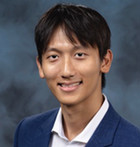
Class of 2027
- BS: University of Tennessee
- MS: University of Pennsylvania
alexander.choi1@nm.org
Tarun Naren, PhD
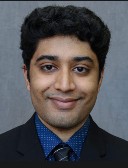
Class of 2028
- BS: Georgia Institute of Technology
- PhD: University of Wisconsin-Madison
tarun.naren@nm.org
Alita D'Almeida, PhD

Class of 2028
- BS: Ramaiah Institute of Technology
- PhD: University of California, Davis
alita.dalmeida@nm.org