What Makes the Pieces Fit: Northwestern’s 2026 Global Allergy Prevention Summit
November 4, 2026
Andrew Nellis
This fall, Chicago marked the changing seasons in traditional fashion — with decorative gourds, inflatable lawn ornaments, and a gathering of the world’s leading food allergy scientists.
In what has become a regular pilgrimage, clinicians, community advocates, and industry partners all converged on the city to attend the Global Food Allergy Prevention Summit (GFAPS), a two-day event designed to foster interdisciplinary collaboration in the pursuit of eliminating food allergies.
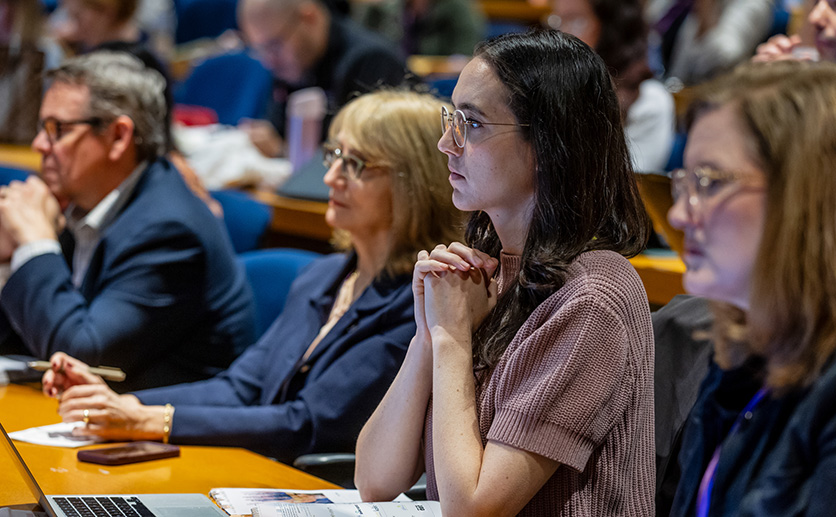
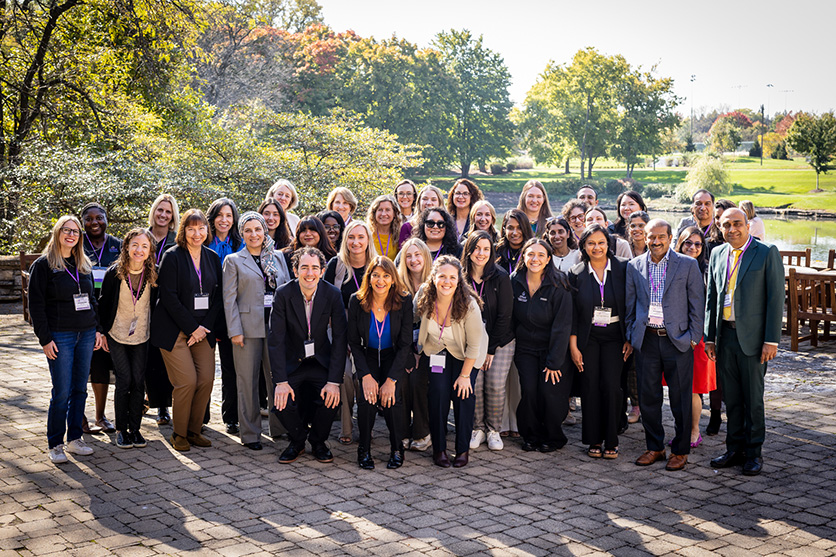
The 2026 summit, hosted by Northwestern University’s Center for Food Allergy and Asthma Research (CFAAR), welcomed a packed auditorium of attendees eager to learn about new challenges and opportunities in disease prevention.
Ruchi Gupta, MD, MPH, founder and director of CFAAR, welcomed attendees and laid out the task ahead of them.
“Food allergy is best thought of as a puzzle. Multiple factors — from early diet to environmental exposures — influence whether a child develops the disease,” Gupta said. “Our goal at GFAPS, the reason we’re all here, is to share our collective insights into each piece of that puzzle and hopefully solve food allergy for good.”
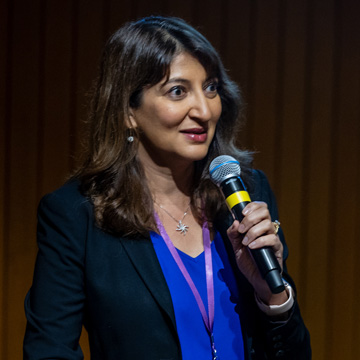
The reason we’re all here is to share our collective insights into each piece of that puzzle and hopefully solve food allergy for good.”
Designed as both a large-scale working conference and community forum, the summit featured presentations from five research groups, detailing new and ongoing research in their respective areas of expertise:
- Early Dietary Influences
- Early Treatment and Secondary Prevention
- The Microbiome and Environmental Factors
- Molecular Mechanisms
- The Role of the Skin
Those presentations served as the springboard for much of the summit’s broader discussion, fueling and informing the next steps in prevention research.
“Being in a single room where everyone is learning from each other and having such meaningful dialogues is truly energizing,” said Christopher M Warren, PhD, research assistant professor of Preventive Medicine at Northwestern’s Feinberg School of Medicine. “It is heartening to see so many people travel thousands of miles to try and figure this out. And it is happening now, in a real and tangible way. We are finding ways to meaningfully improve the lives of kids.”
“It is heartening to see so many people travel thousands of miles to try and figure this out... We are finding ways to meaningfully improve the lives of kids.”
The pendulum’s swing
Research has shown that the early introduction of allergy-causing foods — often around six months of age — can lower some children’s chances of developing food allergies. However, recent studies suggest that early introduction alone may not be enough to prevent the disease in all populations. New evidence has indicated that other factors, like which microbes inhabit a baby’s gut, or exposure to chemicals in our environment, may be playing a more pivotal role than previously thought.
One such study tracked 1,933 children in Australia over three years and found that a mass population-level shift toward earlier introduction of peanut in early infancy only resulted in a small reduction in peanut allergy. Similar findings from other studies, including those in the United States, prompted discussion among attendees about how to advance a more nuanced, effective approach to early introduction.
“Food allergy has a multifactorial etiology, and introducing allergens early is only one part of the picture,” said Rachel Peters, PhD, associate professor and head of the epidemiology stream of the Population Allergy at Murdoch Children's Research Institute, who led the study. “We really need to focus on potentially additional strategies for other root causes of the disease.”
The smallest details
Food allergies affect more than 33 million people in the U.S., and while core drivers of the disease continue to elude scientists, many are hopeful that biomolecular and microbiome research will provide new tools for detection and treatment.
Scientists have so far identified multiple strains of bacteria in the microbiome that play a role in both diseases. Now, efforts are focused on ways to identify and modulate byproducts of those bacteria, which can trigger an outsized systemic response. Certain bacteria in the intestines, for example, can decrease food allergy sensitization by triggering the release of IL-22, a cytokine that help maintain the gut mucosal barrier.
The SUNBEAM birth cohort and SAFER study — major NIH-funded projects conducted under the National Institute of Allergy and Infectious Disease’s Consortium for Food Allergy Research— are both ongoing studies specifically aimed at deepening that understanding.
Cecilia Berin, PhD, the Bunning Professor of Food Allergy Research at Northwestern and co-investigator in both studies, reflected on the opportunities they present.
“Both SUNBEAM and SAFER would allow us to identify predictors and biomarkers of disease,” said Berin. “A good biomarker would allow clinicians to eliminate food challenges, which would be an amazing advance.”
Focusing on what’s most important
Many attendees, from industry representatives to lead scientists, spoke about their close personal experience with atopic disease. That experience is a central component at each year’s summit, ensuring that the perspective of the parent and child are always front-of-mind for everyone involved.
For Melissa Morris, a community health advocate and founder of Food Allergy Moms and regular summit attendee, GFAPS has been a valuable resource.
“Anytime Ruchi or the CFAAR team is hosting an event, I try to attend. They create a unique environment where scholars and lay members of the community are welcomed,” said Morris. “We need people to stay engaged in solving problems. The science of atopic disease is constantly changing, with new breakthroughs coming faster than providers can even adapt.”
That sentiment was shared by patient attendees and researchers alike, sparking a lengthy discussion about the difficulty of blood draws required by some studies and a need to make food allergy research more sustainable for families.
“Doing science in this field requires a village,” said Sara Anvari, MD, MSc, associate professor of Pediatrics at Baylor College of Medicine. “Community partners and patients have a voice that goes far beyond our own. Working together and holding meetings like this where we can hear their insights is vital for future research.”
According to Madeleine Kanaley, MPH, administrative director of CFAAR, fostering that kind of environment is exactly why GFAPS was created.
“Hearing these conversations, seeing how much this summit has grown and the momentum it has built is immensely rewarding,” Kanaley said. “Organizing this event year after year is a tremendous collaborative effort, but our team is all focused on the mission because, for many of us, that mission is personal.”
Planning for the future
Full details about the work discussed at the 2026 summit will be distilled by individual working groups and submitted for publication in the coming months.
More resources on food allergy and ongoing research can be found at FoodSpace — a community hub and repository for food allergy research, offering a study directory, resource library, data catalog, and food allergy data models.
The Center for Food Allergy and Asthma Research is anchored within the Institute for Public Health and Medicine, which serves as the catalyst and nerve center for public health research and education at Northwestern University’s Feinberg School of Medicine.