A Graduate’s Path from Research Assistant to Industry Biostatistician
July 28, 2026
By Bianca Dinkha
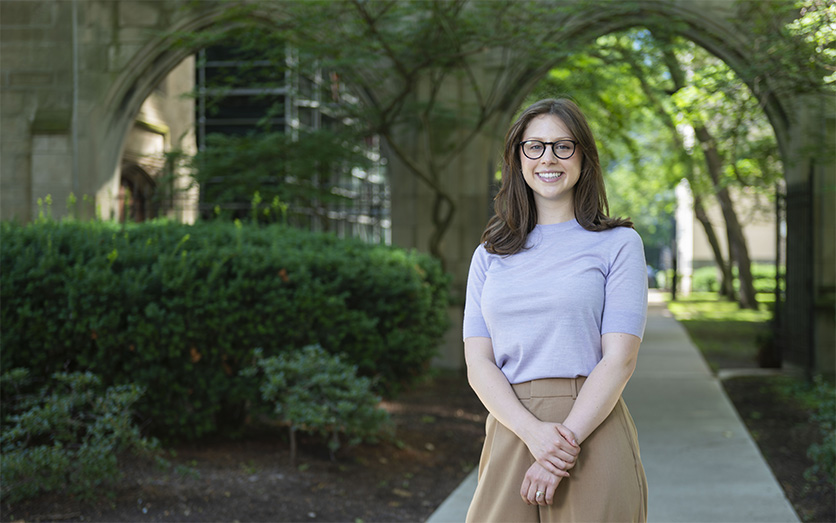
While working as a research assistant for Rush University Medical Center, Claire Heshmat, ’22 MS, never imagined that one conversation would change her career trajectory. After meeting a biostatistician and discussing the field, she saw the potential impact she could make through data, focusing on answering real-world questions and improving public health.
“I wanted to do that job,” Heshmat said. “That was the first time I heard of biostatistics, and I found the analytical work really compelling."
Her newfound curiosity led her to investigate graduate options, gravitating toward Northwestern University’s Master of Science in Biostatistics program. To meet the program’s admission requirements, she completed three semesters of calculus before enrolling with a concentration in statistical bioinformatics.
Reflecting on the program, Heshmat said the accessibility made it easy for her to balance work and studies, noting that the year-long timeline was well-suited for individuals who want to move quickly into the workforce after graduation.
Heshmat described her courses as “difficult but worth it,” adding that the challenge allowed her to grow. Despite the intensity and rigor of the curriculum, it taught her important technical skills. She highlighted the program’s emphasis on proficiency in SAS and R programming languages.
“I felt totally confident to go into an interview and say, ‘I can code in both of these languages,’” said Heshmat. “That was such a valuable asset.”
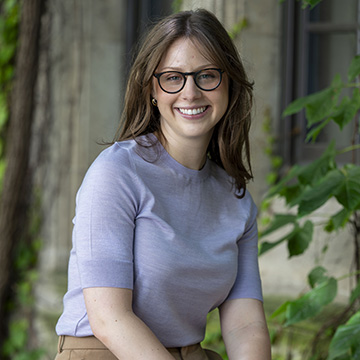
I felt totally confident to go into an interview and say, ‘I can code in both of these languages.' That was such a valuable asset.”
In addition to teaching her essential technical skills, the program fostered a supportive learning environment. “The faculty were very approachable,” Heshmat said. “They were open to conversation and help. I never felt like that wasn’t an option for me.”
For Heshmat, professors like Jody Ciolino, PhD, offered a safe space for students to share ideas and thoughts, extending her mentorship into professional and personal growth. The encouragement confirmed her belief that she belonged in the field.
“With Jody, I could tell that she had a genuine interest in all of the students’ academic and emotional well-being,” she said. “It made me feel like I made a good choice in going to this program.”
Heshmat’s thesis, which involved using genetic information to quality-check blood samples, gave her an early look at the work she hoped to pursue in the future, closely mirroring her current role in diagnostics. During job interviews, employers noticed how similar her capstone work matched the projects their teams were doing.
In fact, her work in the program helped her secure a position in the oncology diagnostic testing space shortly after graduation. “I definitely think it helped me prepare for a real-world application,” said Heshmat.
Since graduating, Heshmat has worked as a biostatistician for Endeavor Health before transitioning to Natera, a private company focused on diagnostic testing in oncology, women’s health, and organ health. She does analytical validation work in the oncology space, helping generate statistical evidence needed for regulatory approvals. This includes a recent, first of its kind, FDA-approval for Natera’s companion diagnostic test in the blood-based molecular residual disease (MRD) field.
Day to day, Heshmat feels like her work gives her a sense of meaning and satisfaction. She values knowing that the tests she helps validate can play an important role in how cancer is monitored and treated.
“I’m very grateful to be where I am, and thankful to Northwestern for getting me here,” said Heshmat.
She leaves with an important piece of advice for those interested in pursuing the master’s degree program at Northwestern: Use your resources and ask questions. Her own experience showed her that turning to faculty for support made the program feel more manageable.
“You have so many resources, so use them wisely,” said Heshmat. “When you graduate, you’re going to wish you had a Northwestern faculty member right next to you to answer all your questions…and never feel embarrassed to ask a lot of questions, because that’s how you learn.”
Long-term, Heshmat aims to continue making an impact in her field and grow her expertise as a biostatistician. She aspires to create better products that ease the burden on families, and most importantly, help people live longer lives.