Faculty Experts
Buehler Center's faculty are drawn from departments and schools across the University and have expertise in many policy-relevant areas.
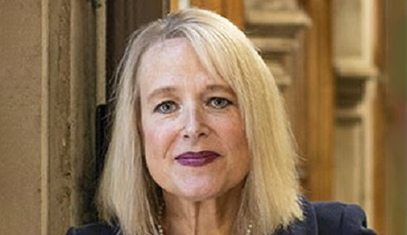
Lori Ann Post, PhD
Director, Buehler Center for Health Policy and Economics - Institute for Public Health and Medicine (IPHAM)
Buehler Professor of Geriatric Medicine
Professor, Department of Emergency Medicine and Department of Medical Social Sciences
She is the Buehler Professor for Aging in the Departments of Emergency Medicine and Medical Social Sciences at the Feinberg School of Medicine. She is the inaugural Director of the Buehler Center for Health Policy & Economics. Dr. Post is an injury control scientist whose work is focused on policy and injury prevention. As a Demographer and Epidemiologist, Dr. Post is expert in surveillance systems and policy to action research. She works on topics such as drug overdose deaths, mass shootings, and other violence prevention projects, and is working on a variety of injury control studies including patterns, hotspots, and spatial heterogeneity of opioid and other drug overdose deaths; economic drivers of the opioid crisis in terms of supply and demand.
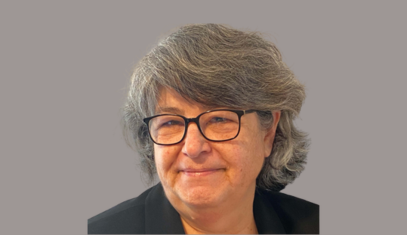
Maryann Mason, PhD
Associate Director, Buehler Center for Health Policy and Economics - Institute for Public Health and Medicine (IPHAM)
Professor, Department of Emergency Medicine
She is interested in health and well-being as fostered by community conditions. As a sociologist she works to understand environmental, cultural, institutional and social influences on health and well being across the life course especially in low resourced communities. She has experience and interest in community engaged scholarship. She has worked in the areas of injury and obesity prevention with a focus on community programming and environmental interventions. Her focus is on collaborative research and evaluation to improve the health and well-being of children and their communities with emphasis on socio-ecological approaches to health. She currently leads violence and injury research in the Buehler Center for Health Policy and Economics.
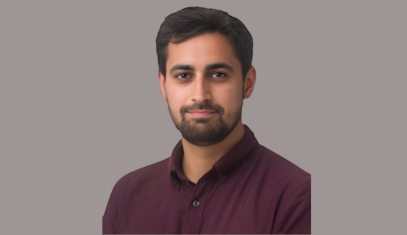
Ciaran N Kohli-Lynch, PhD
Assistant Director, Buehler Center for Health Policy & Economics - Robert J. Havey, MD Institute for Global Health (IGH),
Assistant Professor, Department of Preventive Medicine (Epidemiology)
He is a health economist with research interests in cost-effectiveness analysis, decision-analytic modeling, and cardiovascular epidemiology. His research has focused on the cost-effectiveness of preventive interventions for cardiovascular disease, global health economic evaluation, and the analysis of pooled longitudinal cohort data.
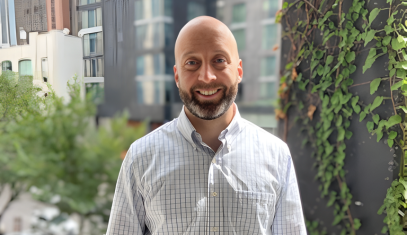
Alexander Lundberg, PhD
Assistant Professor, Department of Emergency Medicine
He is an economist in the Buehler Center for Health Policy and Economics. His research spans a variety of topics, but his primary areas of focus are substance use, violence, and the criminal justice system.
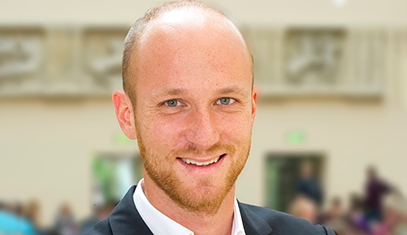
Hannes Schwandt, PhD
Associate Director, Buehler Center for Health Policy and Economics - Institute for Public Health and Medicine (IPHAM)
Assistant Professor, Human Development and Social Policy
He is a health economist and economic demographer who researches the relationship between economic factors and well-being, studying questions such as whether economic shocks or unemployment affect physical health, mortality, and fertility. He also researches the long-term human capital effects stemming from adverse health exposures during the prenatal period or early childhood. He joins SESP from the University of Zurich.
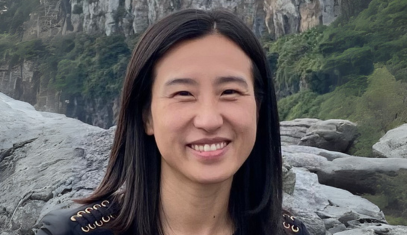
Soyang Kwon, PhD
Research Associate Professor, Department of Emergency Medicine
She is a behavioral health researcher specializing in the application of advanced quantitative methods to study movement behaviors across the 24-hour day. She leads the Child and Mother Physical Activity Study (CAMPAS), an NIH-funded cohort focused on refining sensor-based analytic approaches for measuring children’s physical activity and examining how movement behaviors develop during early childhood. In addition to her research leadership, Dr. Kwon collaborates widely across clinical and public health disciplines, providing biostatistical expertise to multidisciplinary medical research teams.

Gregory Phillips, II, PhD
Associate Professor, Medical Social Sciences (Outcome and Measurement Science), Medical Social Sciences (Determinants of Health), Preventive Medicine (Epidemiology)
His research focuses on using complex epidemiological data and community-based evaluations to identify, describe, and address health disparities in marginalized minority populations. My current work includes using multi-level network and contextual data to understand the spread of infectious diseases, using national surveillance data to pinpoint patterns of health risk and substance use behaviors among LGBT youth, and supporting local community organizations working to reduce the burden of HIV among historically underserved populations.
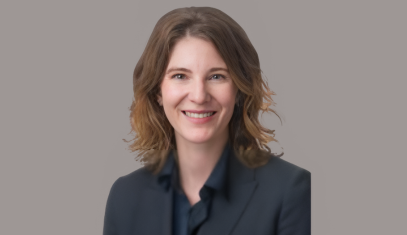
Susan Parker, PhD
Research Assistant Professor, Department of Emergency Medicine
She is a quantitative social scientist applying causal inference and machine learning methods to research in violence reduction, and in particular gun violence and policing.
She holds a PhD in Health Policy with an economics cognate from the University of Michigan’s School of Public Health as well as an MS and MPP from the University of Chicago. Previously, she worked as a senior data scientist.
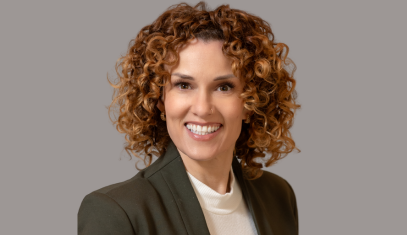
Lindsay D Allen, PhD
Assistant Professor, Department of Emergency Medicine
Pronouns: she, her, hers
She is a health economist specializing in Medicaid policy, substance use disorder treatment, and telehealth. Her research examines how state and federal health policies shape healthcare access, quality, and equity for low-income and intersectional populations.
Dr. Allen is a frequent contributor to national and international media, including NPR, Al Jazeera, and The New York Times, where she provides commentary on Medicaid policy, health system dynamics, and emerging health policy issues. She regularly provides briefings to Congressional offices to inform evidence-based health policy discussions. Her work is funded by the National Institutes of Health (NIH), the Agency for Healthcare Research and Quality (AHRQ), and the Centers for Disease Control and Prevention (CDC).
For media inquiries, please contact Kristin Samuelson (ksamuelson@northwestern.edu).

Bernard Black, JD
Nicholas D. Chabraja Professor with the Law, Business and Medical Schools
His research areas include health policy and medical malpractice, empirical methods for causal inference, law and finance, and international corporate governance. Recent book: Medical Malpractice Litigation: How It Works; Why Tort Reform Hasn’t Helped (Cato Institute 2021, with David Hyman, Myungho Paik, William Sage, and Charles Silver). He is the founding Chairman of the annual Conference on Empirical Legal Studies (2006-2016), a founding editor of the Journal of Law, Finance and Accounting, and has run, since 2010, an annual summer workshop at Northwestern. He is among the leading empirical legal scholars in the U.S., with over 150 published articles and over 31,000 citations on Google Scholar.
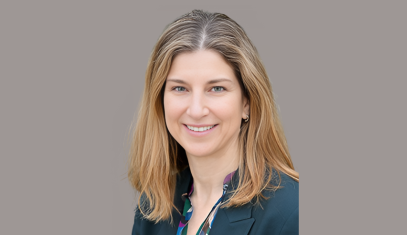
Jill Horwitz, PhD, JD
Trobman Innovation Professor of Law & Professor, Department of Emergency Medicine
She previously served as the David Sanders Professor in Law and Medicine at UCLA School of Law and Professor of Public Affairs (by courtesy) at the UCLA Luskin School of Public Affairs and Jack N. Pritzker Visiting Professor of Law at Northwestern Pritzker School of Law. She was the Vice Dean for Faculty and Intellectual Life at UCLA School of Law for the academic years 2019-2021. Professor Horwitz holds appointments as Research Associate at the National Bureau of Economic Research and Adjunct Professor of Economics at the University of Victoria Department of Economics in British Columbia, Canada. Prior to joining UCLA in 2012, she was on the law faculty at the University of Michigan, where she was the Louis and Myrtle Moskowitz Research Professor of Business and Law and Co-Director of Law and Economics. She also held joint appointments at Michigan with the School of Public Health and the Ford School of Public Policy. As the Reporter for the American Law Institute Restatement of the Law, Charitable Nonprofit Organizations, Professor Horwitz has led the ALI’s first Restatement on the subject. She is the Founding Faculty Director of the Center for Philanthropy and Nonprofits at UCLA School of Law. She has taught Torts, Health Law, Nonprofit Law, as well as seminars in law and economics, nonprofits and philanthropy, governance, and health care reform.
She received her B.A. with honors from Northwestern University. She holds a Master’s Degree in Public Policy, a J.D. magna cum laude, and a Ph.D. in health policy, all from Harvard University. Following law school, she served as a law clerk for Judge Norman Stahl of the U.S. Court of Appeals for the First Circuit. Horwitz is a fellow at the National Academy of Social Insurance and a member of the Bar of the Commonwealth of Massachusetts.
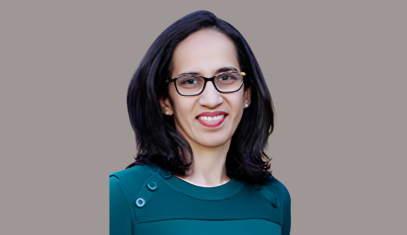
Caroline P Thirukumaran PhD, MHA, MBBS
Associate Professor, Department of Orthopaedic Surgery
She is a tenured Associate Professor in the departments of Orthopaedic Surgery and Medical Social Sciences, and an Associate Faculty at the Institute for Policy Research at Northwestern University, Illinois. She is a health services researcher by training and the Principal Investigator of the OrthoPOD (Orthopaedic Policy, Outcomes, and Disparities) Lab. She founded the lab to generate rigorous empirical evidence to inform the design of payment and delivery reforms for improving orthopaedic surgical outcomes and disparities in those outcomes. Her NIH-funded research focuses on (i) the association of Medicare’s payment reforms with outcomes and disparities in orthopaedic surgeries, and how adjustment for social risk factors can influence these metrics, and (ii) the role of opioid restriction laws in pain management for orthopaedic surgeries. Her work has been published in JAMA, Health Affairs, JBJS, and other leading journals. She serves as the Disparities Section Editor for Current Osteoporosis Reports and is the Research Chair for the Strategies in Clinical Research Section of the Orthopaedic Research Society. Caroline completed her medical education and Masters in Hospital Administration in Mumbai, India; and pursued her PhD in Health Services Research and Policy at the University of Rochester, New York.