Spotlight on Ramin Nateghi
Using AI to support clinical decision-making in prostate cancer
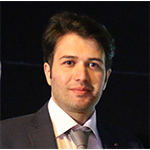
Ramin Nateghi, PhD
Postdoctoral Scholar, Department of Urology
Northwestern Feinberg School of Medicine
What is a cause that you are passionate about?
I am excited about how machine learning can help us ensure that people get the right diagnosis and identify people who have a higher risk of aggressive disease. AI can also help provide more consistent and accurate diagnoses, enable earlier identification of disease, improve the work life of pathologists, and even reduce the cost of care for patients. In my postdoctoral work, I had the chance to work with Drs. Lee Cooper and Ashley Ross, and a team of genitourinary pathologists to address real-world clinical problems using AI.
What factors interested you in working with I.AIM?
Northwestern University’s strong reputation in urology and pathology, along with its integrated clinical centers, provides a unique environment and valuable resources for research. This has led us to create one of the most comprehensive prostate cancer datamarts in the country, encompassing over 150K digitized slides, all linked to clinical reports. The I.AIM Center for Computational Imaging & Signal Analytics in Medicine, led by Dr. Cooper, particularly offers ample resources and expertise for research. Working here allows me to combine machine learning with clinical practice in ways that can make a real impact on patient care.
What projects are you currently working on or interested in?
I have worked on several projects at the intersection of AI and digital pathology for prostate cancer, including:
- Developing a screening system to ensure cancer is not missed in prostate biopsies
- Creating tools to understand why some men have false-negative MRIs
- Exploring the relationship between tissue patterns and molecular classifications of prostate cancer
One project I was particularly excited about was on using AI to support clinical decision-making. In collaboration with Drs. Cooper, Ximing J. Yang and his team of genitourinary pathologists, we developed an AI model that helps rule out unnecessary follow-up tests, making the diagnostic workflow more efficient. Feel free to check it out here:
What are your plans for the future?
I am passionate about applying computational methods and AI approaches to help determine which men with low-grade prostate cancer truly require treatment versus those who can be safely monitored over time, sparing patients from unnecessary interventions and improving their quality of life. I am also interested in using AI to explore new digital biomarkers, offering insights that could lead to more personalized and accurate treatment decisions for patients.