HeartShare Fellow Spotlight: Lina Ekmen
Translating scientific discoveries into better care
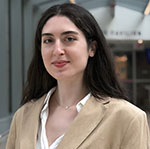
Gulina (Lina) Ekmen, MD
Research Associate
Division of Cardiology
Northwestern University Feinberg School of Medicine
HeartShare Research Skills Program Fellow
What factors interested you in applying for the HeartShare Fellowship?
My medical training and research experience have shaped my interest in understanding how scientific discoveries can translate into better patient care. Since joining Dr. Sanjiv Shah's lab at Northwestern, I have been involved in both clinical and experimental research on heart failure with preserved ejection fraction (HFpEF). One of the things I find particularly interesting about HFpEF is its heterogeneity. Patients with the same diagnosis can have very different clinical characteristics, underlying disease mechanisms and responses to treatment.
I was drawn to the HeartShare Fellowship because of its interdisciplinary approach to cardiovascular research and its emphasis on using advanced analytical methods to address important clinical questions. The opportunity to develop skills in machine learning and biostatistics was especially appealing, as these areas complement my background in medicine and experimental research. I also looked forward to learning from investigators with diverse areas of expertise and broadening the ways I approach clinical research questions.
What projects are you currently working on or interested in?
My current research through the HeartShare Research Skills Program focuses on using machine learning to identify distinct clinical subphenotypes of HFpEF. By applying these methods to clinical datasets, we hope to identify clinically meaningful patient subgroups and better characterize differences in their clinical characteristics, comorbidities and disease progression. I am particularly interested in how data-driven approaches can uncover patterns in complex clinical datasets that may not be apparent through traditional analyses. Through this project, I hope to better understand the clinical significance of these subphenotypes and explore how identifying distinct patient groups could inform future research into disease mechanisms, risk stratification and treatment response.
What are your plans for the future?
My long-term goal is to pursue a career in academic medicine, combining clinical practice with research. I am particularly interested in cardiology, especially heart failure and cardiovascular imaging. Throughout my research experience, I have had the opportunity to work in different areas of biomedical science, from developmental biology and neuroscience to cardiovascular medicine. These experiences have strengthened my appreciation for the connection between fundamental biological discoveries and clinical medicine. In the future, I hope to continue working at this intersection, using clinical data, advanced imaging and computational approaches to better understand disease and improve patient care.
What have you learned that's made a difference for you?
One of the most valuable lessons I've learned through research is the importance of approaching scientific questions from different perspectives. My earlier research experience was primarily in experimental biology, where I worked with cellular and animal models to investigate biological mechanisms. More recently, working in clinical cardiovascular research has introduced me to a different way of studying disease, using patient-level data to understand clinical characteristics, outcomes and patterns across populations. I'm now learning how computational methods and machine learning can complement these approaches. Coming from a medical and experimental research background, this has been a new challenge, but also an exciting opportunity to broaden my perspective. These experiences have reinforced the value of collaborating with people from different areas of expertise and being willing to step outside my comfort zone. I've learned that remaining open to new approaches is an important part of growing as a scientist.
What would people be surprised to know about you?
Before pursuing medicine and research, I trained in classical ballet for 13 years and also worked as a ballet instructor. Ballet was a major part of my life growing up, and I spent much of my time outside of school in the ballet studio. Although my career eventually took a very different direction, ballet taught me many of the qualities that have helped me in medicine and research, particularly discipline, patience and perseverance. It also gave me a lasting appreciation for the arts, which remains an important part of my life.