
Beyond the Heart: NU Docs Students Experience the Science and Humanity of Medicine

For undergraduate students exploring a future in medicine, sometimes the most meaningful lessons happen beyond the classroom. Northwestern University undergraduates in the NU Docs pathway program gathered at Feinberg for the third annual Cardiology Day, an immersive experience designed to introduce students to the science, technology, and human impact of cardiovascular medicine through direct engagement with physicians, hands-on learning, and meaningful conversations about careers in healthcare.
NU Docs, a 10-month pathway program offered through the Feinberg School of Medicine Office of Health Equity, empowers the next generation of healthcare leaders by providing undergraduate students with mentorship, career advising, clinical exposure, and specialty-focused opportunities that help transform curiosity into purpose.
The day opened with welcoming remarks from Quentin Youmans, MD, MSc, Director of Pathway Programs and Student Support and Assistant Professor of Medicine (Cardiology), who introduced students to the many areas of cardiology and the interconnected nature of health. He encouraged students to engage fully throughout the day, reminding them that understanding cardiovascular disease requires understanding the whole person.
Students then joined a virtual discussion led by Melvin Echols, MD, FACC, Chief Health Equity Advancement & Inclusion Officer at the American College of Cardiology and Associate Director of the Cardiovascular Research Institute at Morehouse School of Medicine. Drawing on his experiences as a cardiologist, educator, and advocate for health equity, Dr. Echols challenged students to think beyond grades, applications, and checklists. Instead, he encouraged them to cultivate empathy, resilience, and purpose as future physicians.
“Medical school admission is a milestone, not the mission. The mission is addressing inequities in healthcare and fundamentally changing the delivery of medicine,” Dr. Echols shared.
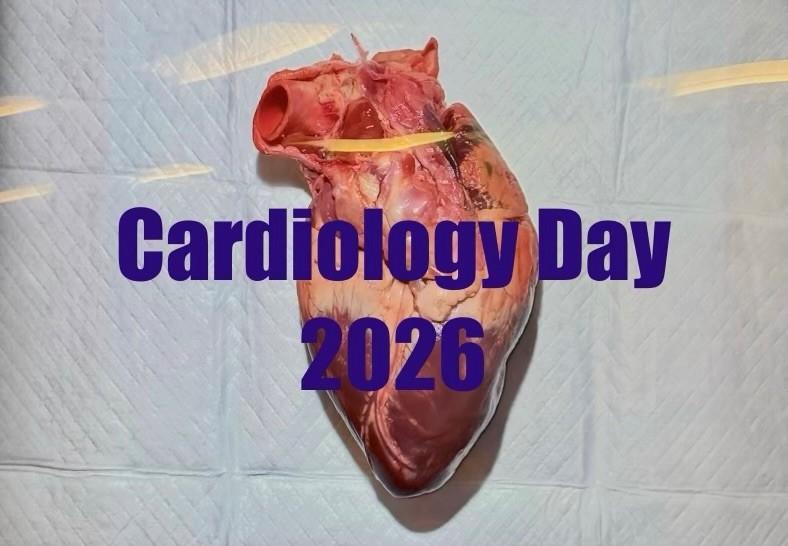
One of the day's most anticipated experiences followed: a hands-on cardiac dissection workshop supported by industry partner ZOLL and led by Northwestern Pathology team, Anaisa Quintanilla-Arteaga, MD, Robert Gounaris, MS, PA(ASCP) and Alyssha Glass, MS, PA(ASCP). As students examined pig heart anatomy up close, they connected textbook concepts to real clinical practice, asking questions about blood flow, structural abnormalities, and cardiovascular disease while learning directly from clinicians in pathology.
Building on the morning's lessons, Dr. Youmans returned for a Cardiology 101 Lunch & Learn that connected anatomy to patient care. Using real-world examples and interactive case studies, he introduced students to concepts such as heart attacks, heart failure, blood pressure, cardiac rhythm disorders, and prevention. Students explored the heart's "plumbing," "wiring," "pump," and "doors" while discussing the importance of early intervention, healthy behaviors, and emerging technologies, including artificial intelligence in cardiovascular care. 
The afternoon continued with an Echo Immersion Program led by Linda Lee, MD, Assistant Professor of Medicine (Cardiology), in partnership with the Northwestern Simulation lab. Students gained firsthand exposure to echocardiography, learning how ultrasound imaging allows physicians to evaluate heart structure, valve function, and blood flow. The interactive session provided a rare opportunity to engage with one of cardiology's most important diagnostic tools.

The day concluded with a reflection from Anjali Rao, MD, Assistant Professor of Medicine (Cardiology), who shared her personal journey into medicine and cardiology. Drawing on lessons from her upbringing and the concepts of seva (selfless service), dharma (living according to one's responsibilities and values), and karma yoga (dedicated action without attachment to outcomes), Dr. Rao encouraged students to think about medicine not simply as a profession, but as an opportunity to serve others with purpose, compassion, and humility.
She also emphasized the importance of seeing patients as whole human beings, rather than simply a collection of symptoms. “The most important thing we can do is slow down and listen,” Dr. Rao said. “A human being is always more than a diagnosis. The patient with heart failure is not simply a heart failure admission. Curiosity about those circumstances is not separate from good medical care or good cardiology. It is a part of it."
As students continue their NU Docs experience, Cardiology Day served as both a learning opportunity and an invitation to envision the kind of physicians, scientists, and healthcare leaders they hope to become. Through mentorship, hands-on discovery, and honest conversations about purpose and service, the third annual Cardiology Day opened another chapter in their journey toward medicine, inspiring them to lead with both knowledge and humanity.
Learn more about the NU Docs Pathway Program.