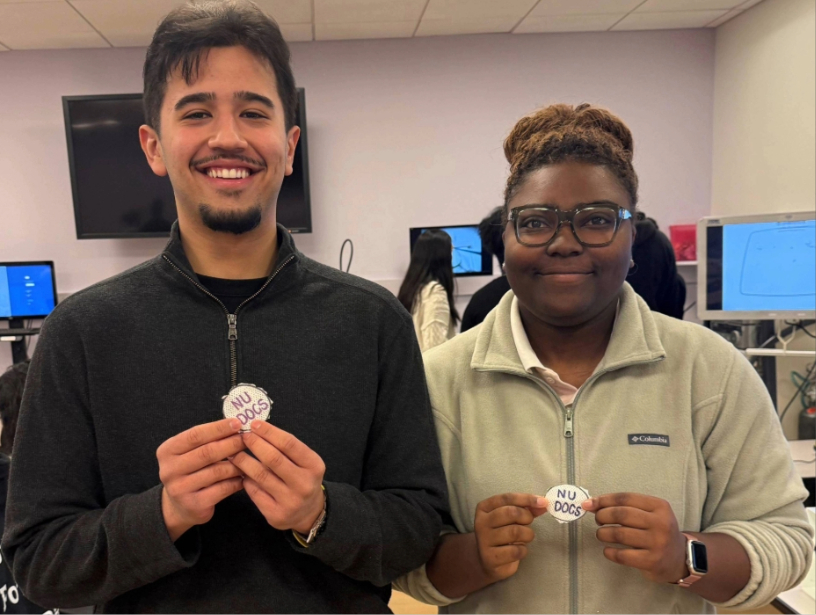
NU Docs OB/GYN Day Showcases the Full Spectrum of Women’s Health
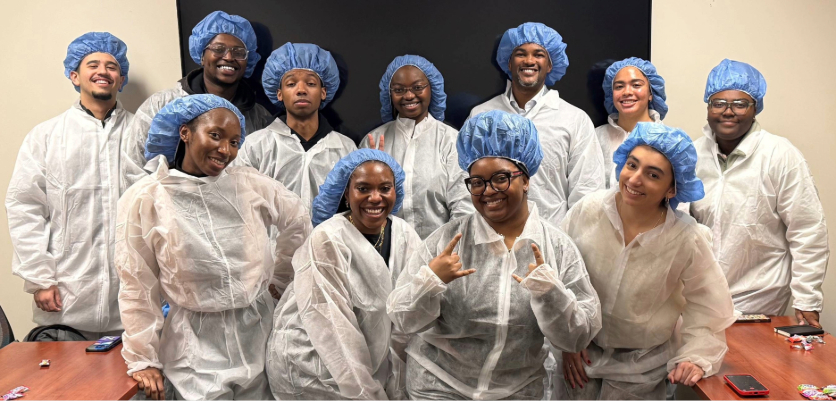
“NU Docs”, a novel initiative sponsored by the Northwestern University, Feinberg School of Medicine, Office of Health Equity, offers an engagement and awareness platform with an open invitation to undergraduate students at Northwestern University considering a career in Medicine. In addition to on-site activities and mentoring at Feinberg, the program now encompasses full day exposures to a variety of medical specialties. The program works as success rates for medical and graduate school (life sciences) acceptance is approximately 75%.
NU Docs students spent the day immersed in the breadth and impact of obstetrics and gynecology—an experience designed to expand what many imagine when they hear “OB/GYN.” While pregnancy and delivery are often the first associations, the day revealed something broader: a specialty that blends high-acuity care, longitudinal relationships, surgery, prevention, and advocacy, supporting patients across the full lifespan.
The day opened with a warm welcome from Arjeme Cavens, MD, Assistant Professor of Obstetrics and Gynecology and Associate Director of Learning Culture at McGaw Medical Center, setting the tone for a dynamic exploration of women’s health. Dr. Cavens shared, “OB/GYN is uniquely positioned at the intersection of medicine, public health, and social context, which allows clinicians to not only provide evidence-based clinical care to patients, but also to translate these clinical and lived experiences of patients into education, advocacy, research and true system-level change. Our experience and platform allows for the translation of bedside observations into further study and improvement in disparities, outcomes, access, and gynecologic cancer prevention that incorporates and addresses real-world needs, builds individualized trust, and meaningfully shapes patient experience and outcomes.”
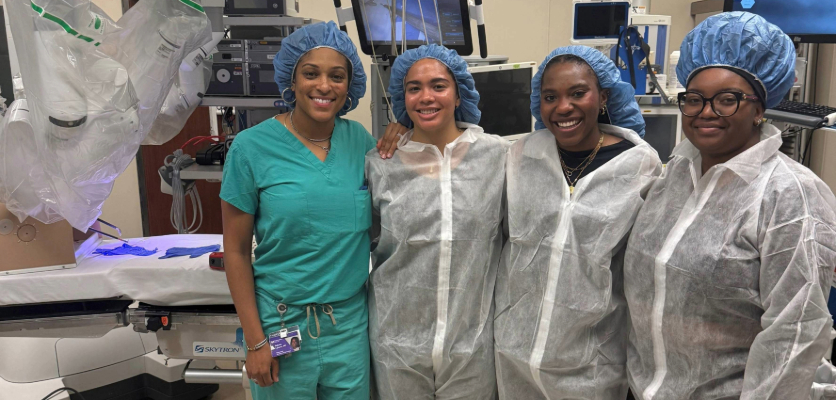
Morning sessions focused on clinical reasoning through case-based discussion. Brittany J. Cline, MD, Instructor at Northwestern Memorial Hospital, introduced the scope of OB/GYN practice and subspecialties, highlighting intersections with emergency medicine and primary care. Students explored how pelvic pain can reflect vastly different diagnoses depending on patient history, exam findings, and risk factors.
Ismely F. Minaya, MD, Assistant Professor of General OB/GYN and Medical Director of Postpartum, led a session on prenatal care and delivery, covering labor pain management options, delivery methods, and obstetric emergencies. Thoughtful student questions underscored a key theme in women’s health: sound clinical judgment is inseparable from clear, compassionate communication—especially in moments of fear or urgency.
Students also had the opportunity to view a placenta up close, offering a tangible look at the anatomy and physiology that sustain pregnancy.
As the day continued, students explored diverse subspecialties through a “day in the life” series. Ecem Esencan, MD, Fellow in Reproductive Endocrinology and Infertility, discussed fertility preservation and inclusive family-building care. Conversations around health equity highlighted how conditions like fibroids—affecting up to 80% of women—continue to face delayed diagnosis and limited treatment due to historic underinvestment in research.
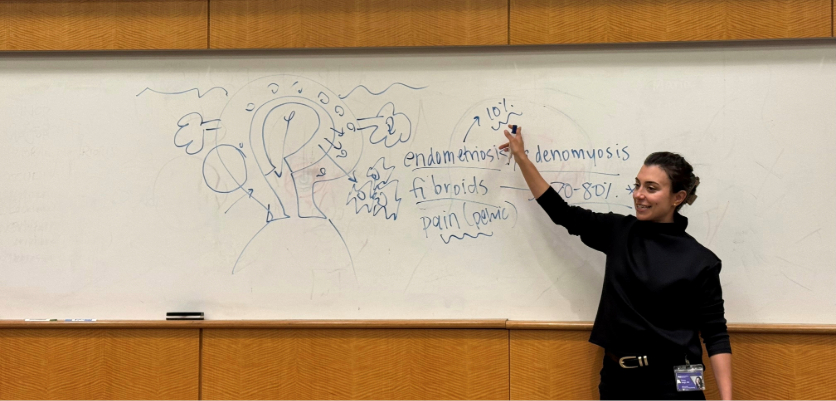
Petra Voight, MD, Instructor in Minimally Invasive Gynecologic Surgery, guided discussions on endometriosis, addressing barriers to care, treatment costs, and the responsibility of clinicians and systems to improve access. Kristina J. Warner, MD, Attending Physician in Urogynecology and Reconstructive Pelvic Surgery at Cook County Health, introduced pelvic floor disorders and emphasized conservative management options like physical therapy before surgery.
High-risk pregnancy care was showcased by Jacqueline C. Hairston, MD, Assistant Professor of Maternal-Fetal Medicine, who highlighted the specialty’s intersection with genetics, cardiology, oncology, fetal diagnosis, and team-based surgical planning. Dario Roque, MD, Associate Professor of Gynecologic Oncology, shared educational videos that offered insight into cancer care within OB/GYN.

Students engaged in hands-on simulations, including suturing, laparoscopic skills training, and ultrasound, while learning how evolving technologies and data-driven tools are shaping the future of reproductive medicine with support from Weronika Armstrong, MD and Nancy Grady, CNM.
By the end of the day, students left with more than new knowledge—they gained a clearer picture of how one specialty can integrate science, innovation, and humanity. OB/GYN Day offered a compelling glimpse into medicine that is technically demanding, deeply relational, and rooted in supporting patients through some of life’s most vulnerable and transformative moments.