Daniel Giraldo, PhD
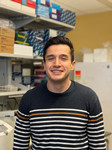
Graduation Year: 2021
Advisor: Longnecker
Current Position: Vice President, Equity Research, Bank of America Merrill Lynch
Daniel Giraldo grew up in Bogota, Colombia, where he did his undergraduate degree in Chemistry and Chemical Engineering at Universidad de Los Andes. Daniel moved to Chicago to start in the DGP in 2015, when he worked with Dr. Richard Longnecker in the Department of Microbiology-Immunology. Daniel is now the Vice President of Equity Research at the Bank of America, Merrill Lynch.
What made you want to go to graduate school?
As an undergrad, I was part of a lot of different projects including organic synthesis and synthetic biology, with a focus on therapeutic applications. I was very passionate about science and particularly research that had potential for therapeutic applications. During my senior year, I became really interested in understanding the molecular mechanisms of disease, particularly all the different strategies that viruses use to replicate and evade the immune system, so I decided grad school was the best way to pursue that.
What brought you to Northwestern and the DGP?
I liked the multidisciplinary approach that the DGP offered, which allowed me to explore a lot of different types of research. I felt that aligned very well with my background coming from Chemistry/Chemical Engineering. Plus being in downtown Chicago was a major plus.
What did you study in graduate school?
I worked in the lab of Rich Longnecker. My research focused on understanding how the immune response, particularly the innate immune response, differs in the brains of newborns and adults. Herpes simplex virus (HSV) encephalitis is very common in newborns but rarely happens in adults, so I was interested in understanding the differences that lead to this difference in susceptibility.
What was your first job after graduation?
I didn’t do a postdoc. After graduating, I transitioned to a career in Biotech Equity Research at Bank of America, where I have been for almost five years. My job involves doing fundamental research on publicly traded biotechnology companies and publishing investment opinions/research reports for institutional investors. I spend my time looking at clinical data from different biotech companies developing novel therapies in different diseases and understanding how that would translate to potential use of these new therapies in the clinic. I regularly speak with key opinion leaders to understand the current therapeutic landscape and with management teams from biotech companies and investors to get their perspectives on data readouts and other key events. My job involves translating fundamental research into revenue forecasts to understand the commercial opportunity for a new therapy.
How did Northwestern prepare you for your current career?
Northwestern provided strong training to develop my analytical skills as well as other important skills like project management and executions. It also gave me exposure to a lot of different research areas beyond my specific focus, which has been critical in my career as an equity research analyst.
What is the most rewarding part of your job?
Having the opportunity to learn about multiple different diseases and novel approaches that biotech companies are taking to tackle new treatments. I also enjoy speaking with experts in different fields and the management teams from different companies regularly.
What is the most challenging part of your job?
My role is in the financial industry, which tends to be high-pressure, so that can be challenging at times. Also keeping track of all the different therapies in development at all times can be hard, given there are a lot of innovations coming from different companies.
What advice would you give to current students interested in pursuing careers outside of academics?
Explore as many different career paths as possible during your time in grad school to get a better sense of what those might look like and what could be the best fit for you. If possible, try to get an internship. There are many programs for internships in industry, consulting, or at financial institutions. Having that will give you a better sense of what your career might look like and make you more competitive when you are applying for jobs. Also try to reach out to as many people as you can and set up informational interviews.
Any final advice for students?
Grad school is a great time to explore different interests and try different things. Don't be afraid to try to do something completely different from what you are doing right now. The most important part of your PhD is the skills you acquire, which can be transferred to a lot of different fields, not just the topic you study.