Innovation Spotlight: Empowering Feinberg's Unsung Heroes
This story was published in the March 2026 issue of The Philanthropist, a newsletter for supporters and friends of Northwestern University Feinberg School of Medicine. View our publications here.
Each day, our faculty, students, and trainees at Feinberg dedicate time to innovate new ideas and programs that will move the needle in medicine and science. Here, we spotlight some of the exciting work that often happens behind the scenes and beyond daily clinical care.
Thank you to all the donors who contribute to these efforts, now and in the future. Your philanthropy fuels these projects and programs—enabling their very existence and empowering them to grow for the benefit of patients today and tomorrow.
 Advancing Motor Recovery Through Neural Mechanism Research
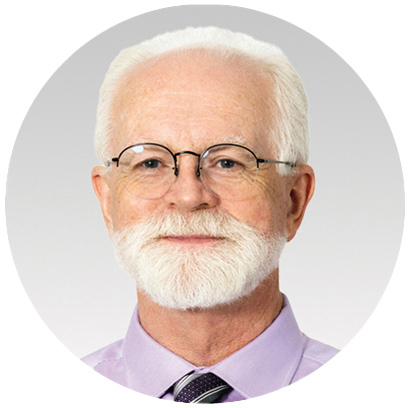
Julius P.A. Dewald, PhD, DPT, chair of the Department of Physical Therapy and Human Movement Sciences and professor of Physical Medicine and Rehabilitation, as well as professor of Biomedical Engineering at Northwestern’s McCormick School of Engineering, leads research focused on understanding and improving motor control in individuals with neurological impairments, particularly after hemiparetic stroke in adults and cerebral palsy in children. His work examines how injury to the brain’s motor pathways disrupts coordinated control of the arm and hand, often producing abnormal coupling patterns and hyperactive stretch reflexes that constrain functional recovery. By integrating neurophysiology, biomechanics, and advanced imaging, Dr. Dewald’s team defines the neural mechanisms underlying these impairments and translates them into targeted rehabilitation strategies to restore independence. This research advances fundamental motor control science while guiding innovative physical and pharmacological interventions aimed at improving quality of life
for individuals living with severe movement limitations after a unilateral brain injury.
For more information on supporting the efforts above, contact Vic Maurer at 773-709-0739 or victor.maurer@northwestern.edu.
 Predicting and Controlling Cell Behavior
Yogesh Goyal, PhD, assistant professor of Cell and Developmental Biology, as well as assistant professor of Chemical and Biological Engineering at Northwestern’s McCormick School of Engineering, studies how cells make decisions during development and disease. His research is highly interdisciplinary, focusing on understanding how individual cells within a tissue coordinate their behavior to form complex structures, and how disruptions in these processes can lead to cancer or other disorders. Using advanced imaging, computational modeling, and single-cell analysis, Dr. Goyal’s lab explores the dynamic interplay between genetic programs and physical forces that shape cell fate. This work reveals fundamental rules of tissue organization and informs strategies to predict and control cell behavior, with potential applications in regenerative medicine and cancer therapy.
For more information on supporting the efforts above, contact Terri Dillon at 312-503-4837 or terri.dillon@northwestern.edu.
 Reimagining Recovery Through Brain-Computer Interfaces
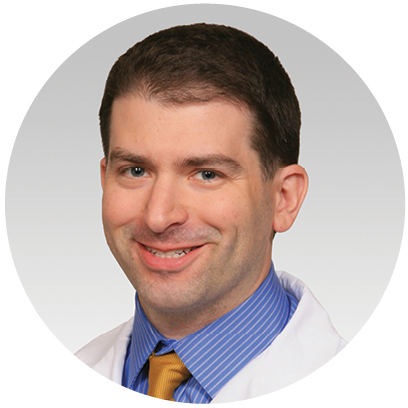
Marc W. Slutzky, MD, PhD, professor of Neurology and Neuroscience as well as assistant professor of Chemical and Biological Engineering at Northwestern’s McCormick School of Engineering, investigates how brain-computer interfaces (BCIs) can restore movement and communication to people living with severe neurological impairments. His lab develops BCIs that translate brain signals into actions, such as moving a computer cursor, or decoding intended speech or language, which opens new possibilities to help individuals with paralysis or impaired speaking from stroke, amyotrophic lateral sclerosis (ALS), or traumatic brain injury. His group also pioneered designs of wearable myoelectric interfaces that use signals from arm muscles to help stroke survivors improve movement through game-based training. Finally, he is developing advanced methods of mapping brain function to improve surgical treatment of brain tumors and epilepsy. Together, this work accelerates the future of neurotechnology with the goal of helping patients regain independence and improve quality of life.
For more information on supporting the efforts above, contact Andrew Christopherson at 312-503-3080 or andrew.christopherson@northwestern.
 Transforming the Future of Women’s Heart Health
Priya M. Freaney, MD, director of women’s heart care at Northwestern Medicine and assistant professor of Medicine, is transforming cardiovascular care for women. Although heart disease claims one in three women’s lives worldwide, many deaths are preventable, and women are not fully represented in research and are served by systems that are not designed for their unique needs. To address this gap, Dr. Freaney is building an integrated ecosystem at Northwestern where scientific discovery and clinical care move forward together. She is developing tailored pathways for pregnancy and menopause- related heart disease, spontaneous coronary artery dissection, and non-obstructive coronary disease. Her research combines advanced cardiac imaging, digital health tools, and interdisciplinary models to create adaptable, evidence-based frameworks that support women’s cardiovascular health across the lifespan. Her current studies include testing digital interventions to improve heart health after preeclampsia and using advanced imaging to detect hidden plaque in women around menopause who have a “zero” calcium score.
For more information on supporting the efforts above, contact Kathleen Praznowski at 312-503-0762 or kathleen.praznowski@northwestern.edu.