Residents
Comprehensive, broad-based training at the nation’s #1 rehabilitation hospital
Mission
The Department of Physical Medicine and Rehabilitation’s residency program at Northwestern University Feinberg School of Medicine is dedicated to developing future leaders in PM&R by offering comprehensive, broad-based training in high-quality clinical care, research, and medical education across the diverse facets of our specialty.
Program Aims
- Educate residents to provide them access to a variety of complex rehabilitation patients under the guidance of engaged faculty subspecialty experts with the goal of developing clinical skills to improve patient outcomes.
- Prepare future leaders of our field by providing opportunities to focus training in areas of individual interest or educational needs.
- Challenge our residents in a supportive environment to grow into
- Evidence-based physicians and lifelong critical thinkers
- Highly respected clinical experts
- Educators for patients, families, and medical trainees
- Advocates for our patients and the field of Physical Medicine and Rehabilitation.
Train at the Shirley Ryan AbilityLab
The Physical Medicine & Rehabilitation (PM&R) Residency Program is a dynamic and interactive training program that is predominantly based at the Shirley Ryan AbilityLab, the nation’s #1 rated rehabilitation hospital in the U.S. News & World Report every year since 1991. The Shirley Ryan AbilityLab is the first ever “translational” research hospital where clinicians, scientists, innovators and technologists work together in the same space, applying research in real time to patients with disability. It is an ideal training ground for PM&R residents. Our residents also have access to training at Northwestern Memorial Hospital and all the top rated departments and faculty at Northwestern University Feinberg School of Medicine.
Specialty Tracks
Medical Education Track
This is an optional 18-month specialty track for residents interested in a career in medical education. Many of our resident graduates have continued their careers in academic medicine and are actively teaching a new generation of physiatrists. Being a teacher and being an educator are two distinctly different things that is not immediately transparent. Beyond acquiring teaching skills, this track is designed to expose our residents to curriculum design, proper assessment methods and theories on teaching and learning. All residents on this track participate in a medical education project. Many of these medical education projects will also fulfill the resident research requirement of the program. Participants in this track meet monthly to have a faculty-guided discussion on educational topics.
Program Components:
- Attend Core Didactics/Workshops
- Complete Asynchronous Learning
- Complete a scholarly project
- Attend Core Didactics/Workshops
- Complete a scholarly project
Program Objectives:
- Develop medical educators by gaining knowledge in medical education topics
- Obtain the skills to be an excellent teacher and educator
- Learn the basic knowledge and skills to help with future career goals such as residency program director, fellowship director, director of medical student education, designing Continuing Medical Education (CME) content at national meetings
- Complete a scholarly product that allows the learner to increase their understanding of the ethical challenges in their own subspecialty
Leadership Track
This is an optional 18-month specialty track for residents who are interested in developing leadership skills. Many of our resident graduates have become medical directors, section chiefs and chairs. Being a leader and a manager are two unique different things that is not always readily apparent to those new to leadership. One of our program aims is to develop leaders of our field. This track provides formal training in leadership skills such as providing feedback, goal/vision setting, strategy development, problem solving and understanding organizational structure and finances. Participants in this track meet monthly to have a faculty guided discussion on educational topics.
Program Components:
- Attend Core Didactics/Workshops
- Complete Asynchronous Learning and "pre-work" for each session
- Participation in discussions
- Complete a leadership project
Program Objectives:
- Provide education on leadership skills to residents who want to be the future leaders of our field.
- Recognize the influence of emotional intelligence on leading others.
- Develop of process of self-awareness and consistent self-assessment when leading others so that our leadership styles can match the situation and the audience.
- Develop internal and external communication skills in leading teams
- Recognize the differences between managers and leaders.
- Reflect on conflict management styles and practice difficult conversations strategies.
- Understand the value of goals, vision and mission in the context of leading large organizations
- Review concepts of teambuilding and leading a team.
- Develop skills of mentorship and sponsorship, as both the mentor/sponsor and the mentee/sponsoree
- Develop an understanding of organizational structure and the complexities of the finances of healthcare
Quality Improvement and Safety Track
This is an optional 18-month specialty track for residents who are interested in developing advanced skills in leading quality improvement and safety initiatives within the healthcare system One of our program aims is to develop leaders of our field. Clinical leaders in our field will need the critical skill of understanding how to identify quality improvement and safety issues, lead these projects and analyze the outcomes from quality and safety initiatives throughout the span of their career. This track is intended for residents with aspirations in a career of leading quality improvement initiatives in their future work. Participants in this track meet monthly to have a faculty guided discussion on Quality Improvement and Safety projects and topics.
Program Components:
- Monthly meetings to discuss ongoing Quality Improvement and Safety initiatives currently ongoing within the hospital Participation in the PDSA cycle for the Quality Improvement projects of the group
- Participation in discussions about the progress of each project
- Completion of a quality improvement or safety project
Program Objectives:
- To be able to identify a quality improvement issue and lead a PDSA cycle from start to finish including (1) Writing a problem statement, (2) Developing an opportunity statement, (3) Determine outcomes for success, (4) Analyze outcomes and formulate an action plan, (5) Check outcomes and interpret the success of the plan
- To demonstrate the ability to lead a root cause analysis for a safety issue and learn how to integrate this in their clinical environments
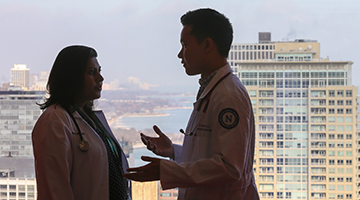

Our Place
Learn about resident life, including what it's like to live and work in downtown Chicago and get a snapshot of our several clinical sites.
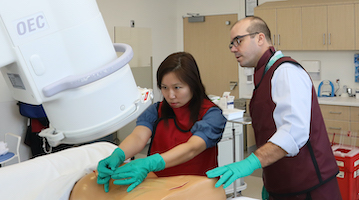
Our Program
Explore our curriculum and research opportunities, and learn how to apply to join a future class of trainees.
Starzl Academy
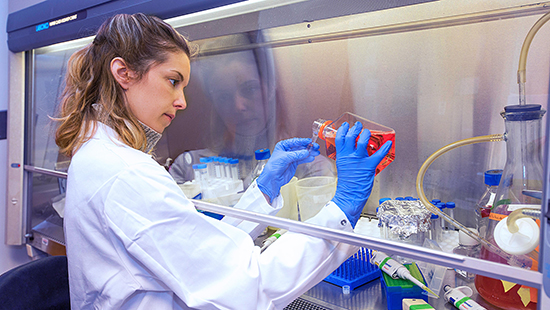
Physician-Scientist Training & Resources
We offer a wide range of resources, mentorship opportunities and formal training programs to help our residents and fellows excel as physician-scientists. Explore all of the resources and hear from housestaff who are making research a major part of their career development plans.