Minds Matter Benefit Raises Over $1.5 Million for Brain Tumor Research
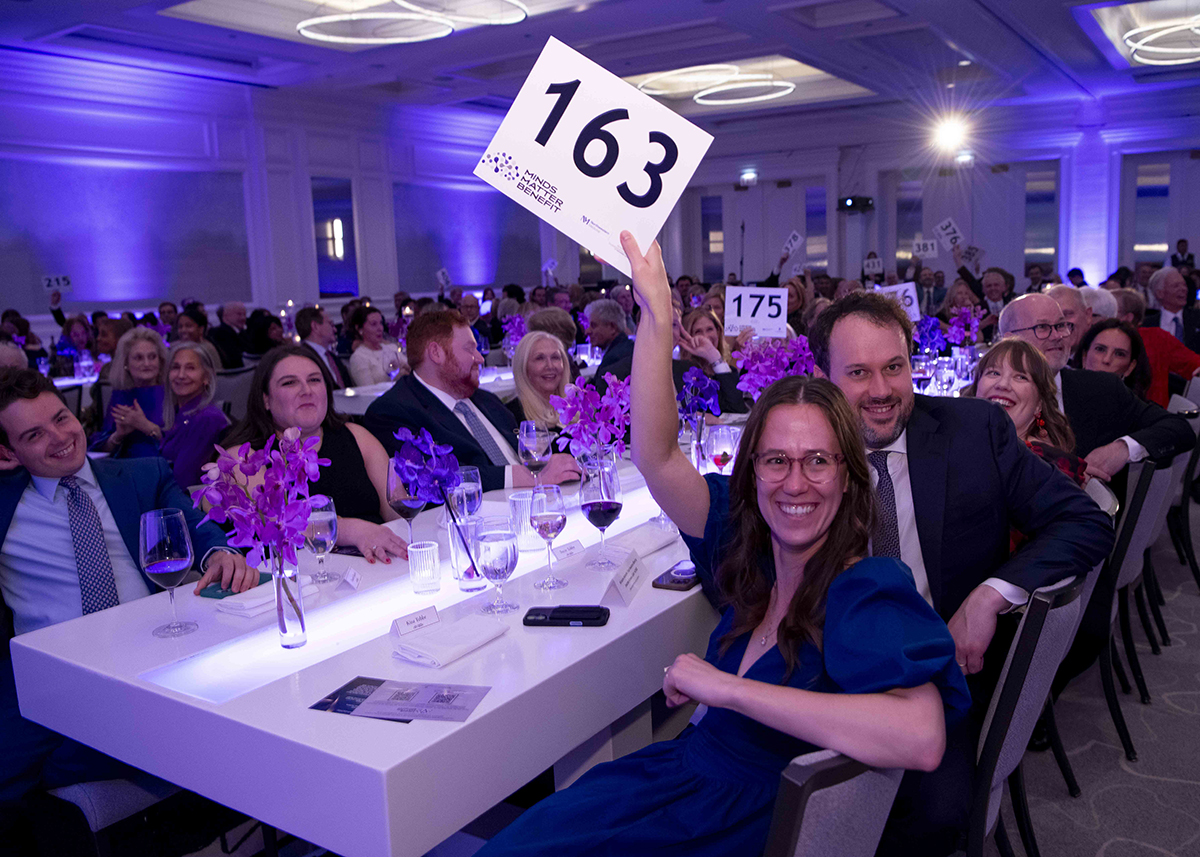
The 18th Annual Minds Matter benefit drew about 400 supporters on May 1 and raised more than $1.5 million to advance research and patient care at the Lou and Jean Malnati Brain Tumor Institute of the Robert H. Lurie Comprehensive Cancer Center of Northwestern University.
Held at the Four Seasons Hotel Chicago, the event celebrated Malnati Brain Tumor Institute’s research accomplishments and reputation for providing world-class care to patients with brain tumors. Every year, MBTI admits more than 3,000 new patients with brain tumors and performs more than 700 brain tumor surgeries.
The event featured a dinner, auction, and paddle raise, as well as remarks from MBTI co-directors James P. Chandler, MD, and Roger Stupp, MD.
This year, MBTI honored Robin Loewenberg Tebbe with the Minds Matter Award for her more than 15 years of support and dedication. Tebbe’s first husband, Louis Berger, succumbed to glioblastoma in 2010. Dr. Chandler and other members of the MBTI provided multidisciplinary care at the time. Tebbe since served as a member of the MBTI Advisory Council for many years and hosted multiple 10K races through her real estate company, Magellan Development, with proceeds benefiting the brain tumor institute. Today, she is an avid fundraiser for MBTI research.
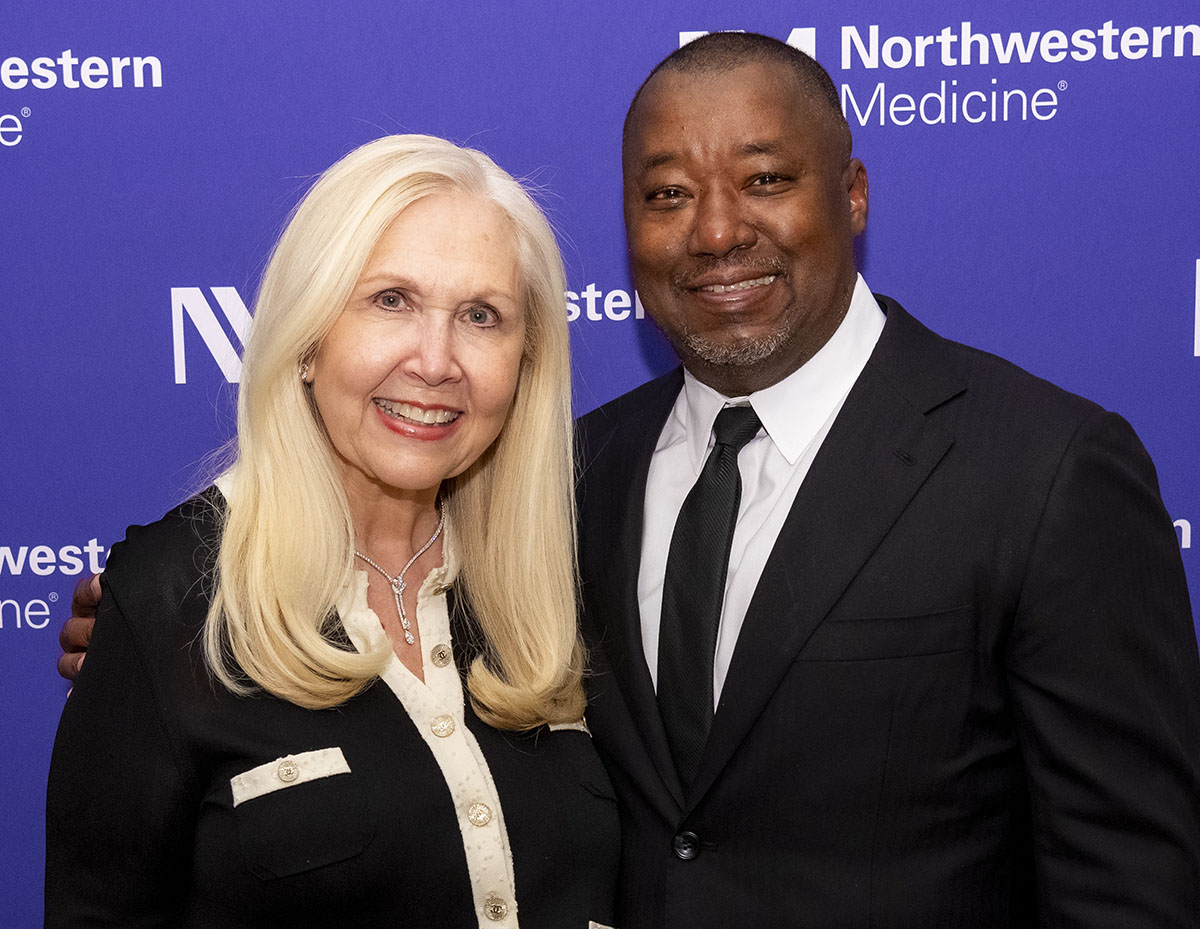
“I’m so honored to be receiving this award,” said Tebbe, who was accompanied by her husband, Mark, her adult children, and several friends, many of whom flew in from out of town. Addressing the crowd, she said, “I want you to know that every dollar that you have given to us tonight is going to incredible research and is extending the lives of so many patients.”
Friend Meredith Bluhm Wolf expressed admiration for Tebbe's impact. “I am so proud of Robin and Dr. Chandler and their dedication to the cause," she said, adding that she was impressed by the life-changing work of MBTI.
Deborah Marchese, an MBTI Advisory Council member, shared that Tebbe exhibited remarkable tenacity during a difficult journey and beyond—raising two sons who now lead successful, independent lives. “She is deeply deserving of this award,” she said.
The Northwestern Brain Tumor Institute was established in 2008. In 2017, the Lou Malnati Cancer Research Foundation made a transformational gift to the institute to help advance education, research and patient care. Each year, more than 700,000 individuals and their families in the US face brain and spinal tumor diagnoses, and today, MBTI scientists are committed to advancing research and improving treatments for even the rarest brain tumors.
Brain Tumor Breakthroughs
MBTI scientists have already published important discoveries in 2026. One major advance came from a study showing how immune cells within glioblastoma tumors can fuel cancer growth by metabolizing fructose. Led by Jason Miska, PhD, assistant professor of Neurological Surgery and published in Proceedings of the National Academy of Sciences, the research uncovered a previously hidden metabolic pathway that suppresses anti-tumor immune responses, pointing to new treatment strategies that could block tumor-supporting immune activity and slow disease progression.
Another landmark study, published in Nature Communications, demonstrated that activating the STING signaling pathway can trigger potent immune and cytotoxic responses against meningioma, the most common primary brain tumor. The findings, led by Mark Youngblood, MD, PhD, a resident physician in Neurological Surgery, provide strong preclinical evidence that immunotherapy approaches long considered ineffective for brain tumors may hold promise for select patient groups, marking a significant step toward expanding immune-based treatments in neuro-oncology.
Dr. Sonabend, associate professor of Neurological Surgery and the Etka Frimerman Professor of Neurosurgery, also reported a clinically impactful breakthrough in glioblastoma care with the development of a non-invasive method to predict chemotherapy response, also published in Nature Communications. By enabling physicians to identify which patients are most likely benefiting from treatment, the approach could help guide more personalized care, reduce unnecessary side effects, and improve outcomes in one of the deadliest forms of cancer.
Philanthropic Payoff
Philanthropic support for MBTI pays dividends in the research space, Dr. Stupp said in remarks.
“Your seed money brings in more research,” said Dr. Stupp, who also serves as the Paul C. Bucy Professor of Neurological Surgery, citing a highly effective path for successful research. Donors’ gifts allow early-stage research to get off the ground, then scientists can use their findings to apply for federal grants that let them grow their projects.
For example, he said, Crismita C. Dmello, PhD, assistant professor of Neurological Surgery, began her lines of inquiry into the genetic mechanisms that cause brain tumors like glioblastoma to resist immunotherapy in the lab of Adam M. Sonabend Worthalter, MD. In 2024, she obtained her first National Institutes of Health (NIH) grant for her research, and today she continues her investigations using advanced genetic tools to uncover immune weaknesses.
This year, Minds Matter attendees also heard from Tori Carmen, a news anchor from Greenville, South Carolina, whose patient story was streamed at the event in a pre-recorded video. Carmen underwent a craniotomy to remove a Grade 3 meningioma—the most common type of brain tumor—in April 2025, and in May that year, she had Gamma Knife radiosurgery. Now, a year out from her initial surgery, MRI scans show she is cancer-free.
“It’s worth going to the ends of the earth to be at the right place to receive the right care, the best care for yourself or for the person you love,” Carmen said in the video. “And that’s what we did going to Northwestern.”
For more information about supporting the Malnati Brain Tumor Institute, please contact Liz Breslin at elizabeth.breslin@northwestern.edu or 312-503-4576.