Lee Family Advances Research and Community for Rare Disease
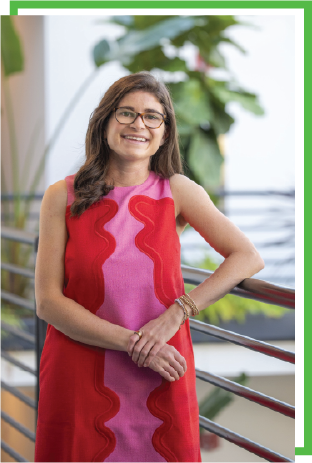
Growing up with Darier disease was often a lonely experience for Genevieve Lee, who was just 6 years old when she began experiencing symptoms. She remembers trying to make sense of why she had a rare skin condition others in her family did not—and why answers were often slow to come.
Now a 28-year-old schoolteacher in Chicago, she has transformed her isolation into global community. In addition to donating cells for research at Northwestern University Feinberg School of Medicine, in 2024, Genevieve founded Decoding Darier’s, an advocacy space designed to help patients—especially young people—share their stories and find support outside the exam room.
“Having support from other patients and family members who actually live with Darier’s is a really personal way to connect,” she said.
Through Decoding Darier’s, Genevieve has built an online community of fellow patients and their loved ones where they can connect in private, moderated forums to discuss skincare, mental health, pediatric care, and advocacy. In 2024, she organized the first-ever Walk for Darier’s, which inspired participants across the US, Europe, South America, and Asia. They held their second-annual walk in October 2025.
Behind Genevieve’s work is the same family commitment that has guided her since childhood. Her parents, Laura and Bruce Lee, have generously contributed to Darier disease research at Northwestern, where scientists are working diligently to understand why and how it disrupts the skin’s natural cohesion and to ultimately build a future where “orphan” diseases such as Darier disease are understood more quickly, clearly, and compassionately.
Orphan diseases are often underfunded due to their limited visibility, making progress in finding treatments slow to come. But thanks to Laura and Bruce’s philanthropy and Genevieve’s advocacy, research is picking up steam.
“It’s incredible. I’m very fortunate that both of my parents are so involved,” Genevieve said. “That’s what makes it really special.”

That involvement was shaped early in Genevieve’s life, during years when managing Darier disease meant discomfort and uncertainty. As a child, she would have to stay out of the sun while her siblings played outside, and as a teenager and college student, she struggled to feel comfortable in her affected skin: no tank tops, V-necks, or strapless clothing due to her condition that causes a rash. She also struggled with daily treatment routines, often without fully understanding their long-term importance.
“As a kid, I fought against the routines because I didn’t understand how much they could help me,” Genevieve said. “I was the only one of my two siblings with it. With a kid’s mentality, it was hard to make sense of why they didn’t have to go through this.”
For her mother, those years were defined by careful balancing.
“It was years of trial and error to try to find a treatment. We would try a new topical or oral medication, get our hopes up, wait six months, and realize it didn’t work,” Laura Lee said. In the meantime, as a parent, “you’re doing a balancing act between doing everything possible to help your child and continuing to treat them the same as your other children.”
Today, the Lees’ philanthropy reflects both that lived experience and their resolve to accelerate progress. At 8, Genevieve became a patient of Amy S. Paller, MD, chair of the Department of Dermatology and the Walter J. Hamlin Professor of Dermatology at Feinberg. Since then, the Lees have built close relationships with the physicians and scientists working to understand the biological mechanisms underlying Darier disease.
“Over the past 20 years, we’ve tried many treatments to help manage Genevieve’s daily discomfort,” Dr. Paller said. “Impressively, she has turned her personal challenges into a mission that benefits the entire rare disease community. Watching her grow into such an effective voice for others has been incredibly inspiring.”
It was Dr. Paller who first rallied the family behind Northwestern’s research effort and encouraged Genevieve to contribute her skin cells to the cause, enabling a series of investigations that have improved scientists’ understanding of Darier disease and introduced new approaches now informing clinical care.
“We are blessed and thankful to be working with such a brilliant group of scientists at Northwestern. We think of them as an extension of our family and we share the same goal: unlocking the mysteries of Darier’s disease,” Bruce Lee said. “But I know one thing that is not a mystery—that is Genevieve’s courage, dedication, and optimism toward tackling this disease. And she will make sure that others that have Darier’s will never feel alone again. I see that as her first major win.”
What Patient Cells Can Teach Us
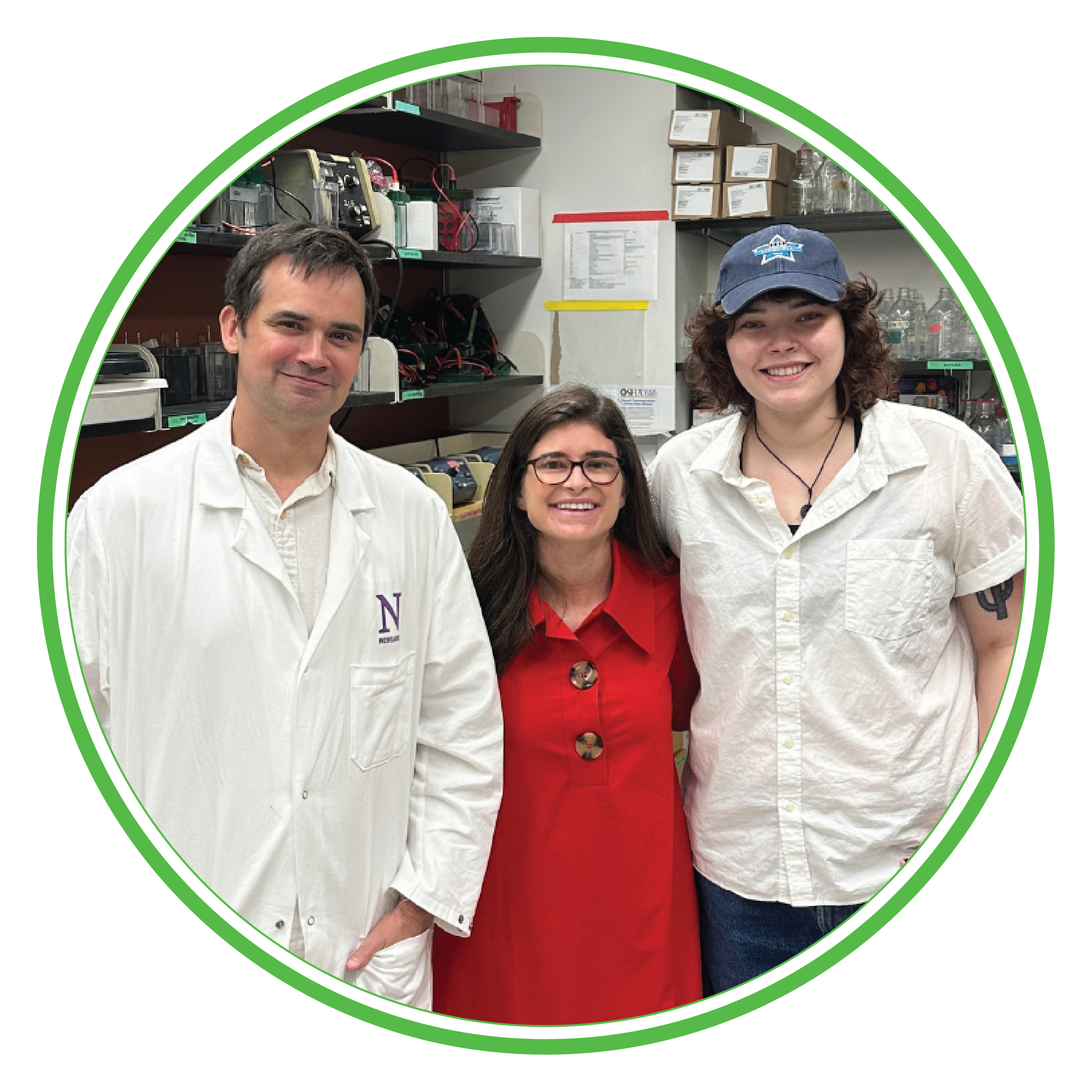
At the core of Darier disease is a loss of adhesion between skin cells, traced to inherited mutations in the gene encoding SERCA2, a protein essential for normal cellular function, explains Robert Harmon, PhD, a research assistant professor of Pathology. When SERCA2 is altered, the skin’s structural integrity begins to break down.
Using Genevieve’s skin cells, Dr. Harmon can recreate aspects of the disease in the laboratory to better understand how faulty SERCA2 weakens cell-to-cell bonds. The cells are cultured and carefully propagated, giving scientists a living model to study. Through biochemical assays and high resolution microscopy, Dr. Harmon examines how mutant SERCA2 disrupts cellular adhesion—and explores ways those molecular missteps might be corrected to restore skin strength.
This work takes place in the lab of Kathleen J. Green, PhD, the Joseph L. Mayberry, Sr., Professor of Pathology and Toxicology and professor of Dermatology, who leads Northwestern’s Darier disease research program. For Dr. Green, the challenge is not only scientific but systemic.
“Over 10,000 rare diseases affect a small number of people individually but comprise a large burden collectively,” she said. “Pharma has often overlooked them due to prohibitive development costs. Even with federal incentives, securing support to study their basic biology—essential for effective therapies—remains a major challenge.”
Despite these hurdles, Dr. Green said she is hopeful. Working with colleagues at Northwestern and beyond, including a consortium that convened at a Lee family-supported retreat in fall 2025, she remains optimistic about uncovering new treatment strategies. In fact, she said, they are testing new US Food and Drug Administration-approved drugs in patient cell models and collecting high dimensional data that reveal metabolic vulnerabilities, opening paths to restore cell functions that decline with age and stress.
The Lees’ philanthropy and commitment to fostering a global network of patients, physicians, and scientists are helping to improve communication, awareness, and funding for Darier disease research.
“It is a rare privilege to have the opportunity to interact directly with patients and patient families who we are trying to help with our research, and I can safely say that we treasure our interactions with the Lees and are inspired by them every day,” Dr. Green said.
For more information about Darier disease research, please contact Terri Dillon at terri-dillon@northwestern.edu or 312-503-4837.
This story was published in the March 2026 issue of The Philanthropist, a newsletter for supporters and friends of Northwestern University Feinberg School of Medicine. Read past issues here.