A Mother’s Mission Powers Precision Medicine for Genetic Disorders
This story was published in the March 2026 issue of The Philanthropist, a newsletter for supporters and friends of Northwestern University Feinberg School of Medicine. Read past issues here.
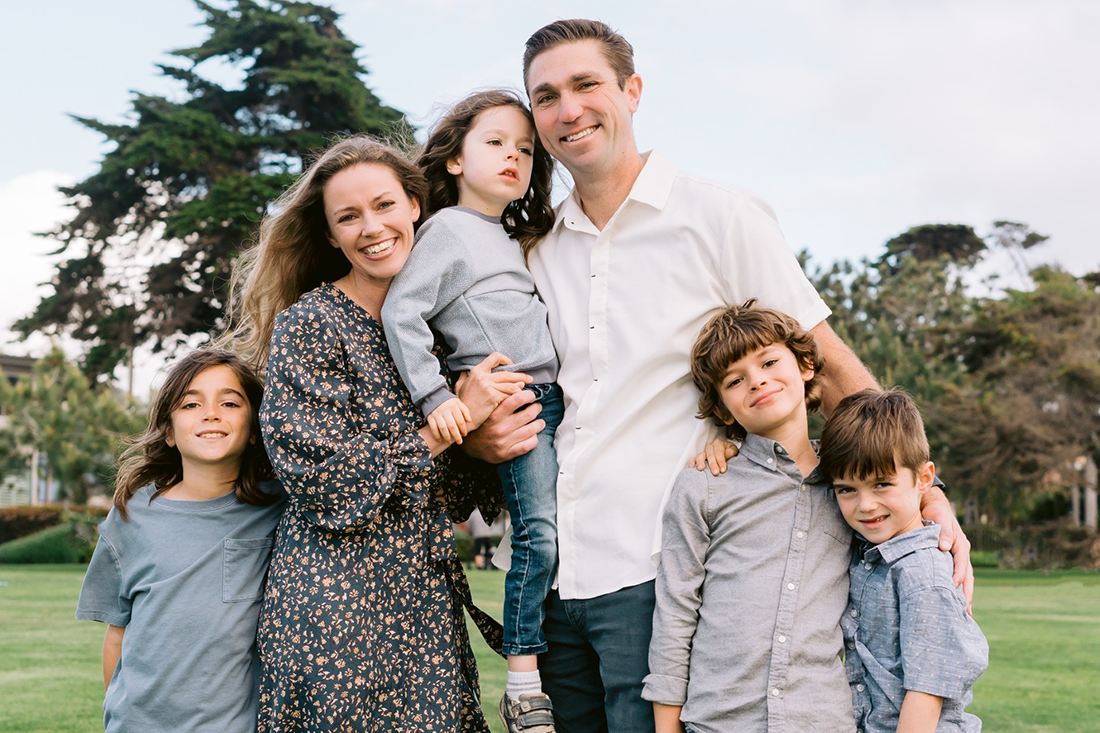
When Michaelle Jinnette of San Diego learned that her 15-month-old son, Tristan, had an ultra-rare genetic disorder, “our lives came tumbling down around us,” she said.
Now 6 years old, Tristan is nonverbal and lives with an intellectual disability. He also experiences seizures that pose serious health risks. He shares his condition, the result of a mutated gene called KCNH1, with fewer than 100 children worldwide.
“We were completely blindsided by the diagnosis as we started to realize what his future would actually look like,” Jinnette said. “It’s like having a toddler for the rest of your life. Every minute of every day is shaped by his care needs.”
Driven by the desire to give her son a happier, healthier, and more independent life, she and her husband, Kevin Witt, formed the Cure KCNH1 Foundation. The foundation is a patient-led non-profit advancing research to develop treatments and, ultimately, a cure for these disorders. In the early days of the Cure KCNH1 Foundation, Jinnette took it upon herself to cold email dozens of rare-disease investigators around the world, searching for help. High on that list was Alfred L. George, Jr., MD, chair of the Department of Pharmacology and the Alfred Newton Richards Professor of Pharmacology at Northwestern University Feinberg School of Medicine. Since connecting with Dr. George, a pioneer in the field of genetics and study of channelopathies, the Cure KCNH1 Foundation has catalyzed new research into KCNH1-related disorders.
Turning Family Advocacy into Genetic Insight
KCNH1 is a potassium channel gene—a classic “channelopathy.” Channelopathies are diseases caused by problems in ion channels, which are proteins that help electrical signals pass through cells. KCNH1 encodes a potassium channel that is especially important in the brain.
Dr. George’s lab determined the functional consequences of dozens of KCNH1 variants, showing how individual mutations change potassium channel behavior and laying the groundwork for precision therapeutics. Now, philanthropic funding from the Cure KCNH1 Foundation is propelling the next phase: a gene-editing study aimed at correcting the most common pathogenic KCNH1 variant—an approach that Dr. George and Jinnette described as uniquely promising because of its efficiency and minimal off-target effects.
“I’ve been pushing for a CRISPR gene editor for years, since this approach represents a true ‘cure’ by correcting that one incorrect nucleotide, so that kids can have functional, healthy proteins,” Jinnette said. “Finally, Dr. George started working on it, and he’s identified some really promising compounds.”
Beyond his diligence in the lab, Jinnette said, Dr. George has provided mentorship and logistical guidance to Jinnette and her organization, encouraging the creation of a patient registry, natural history studies, and conferences that bring scientists and families together to accelerate discovery.
“Working with patient advocate groups, including parents of children with rare neurological disorders, has been the highlight of my career,” Dr. George said. “Seeing the enormous burden on families associated with KCNH1 and other genetic brain disorders is strong motivation for my team to work hard to find answers and seek cures. We have immense gratitude for receiving philanthropic support for our research, and the greatest reward will be seeing it translate into real change.”
Crucially, new disease models are in place to accelerate testing. Jennifer A. Kearney, PhD, associate professor of Pharmacology, has created a powerful mouse model that mirrors the severe seizure phenotype seen in many children with KCNH1 mutations. A second, complementary model, developed at The Jackson Laboratory, helps capture developmental symptoms. With subsequent support from the Cure KCNH1 Foundation, Dr. Kearney’s laboratory is now testing gene editors, RNA-based therapeutics, and repurposed medications. These mouse models provide essential preclinical evidence needed to move experimental treatments toward human trials.
For families like Jinnette’s, the science is urgent. Tristan’s disorder requires constant vigilance and complex medical management from his parents and even his three siblings. “While many have moved on after the COVID-19 pandemic, we still live our lives in terror of illness because it can trigger dangerous seizures,” Jinnette said.
Yet she remains focused on progress—and partnership. While the foundation has been invaluable for piloting potentially groundbreaking disease-modifying therapies, its resources are limited and cannot advance the work alone.
“There’s no viable commercial path for ultra-rare diseases. It’s really up to the families pounding the pavement,” she said. “We’re at a historic moment in history, with these monogenic rare diseases at the forefront of cutting-edge precision medicine, and we’re hoping to bring these medical miracles to the KCNH1 community as quickly as possible.”
For more information about supporting gene-editing research, contact Andrew Christopherson at andrew.christopherson@northwestern.edu or 312-503-3080.