19th Annual Benefit Dinner Marks a Year of Progress Across Global Health Initiatives
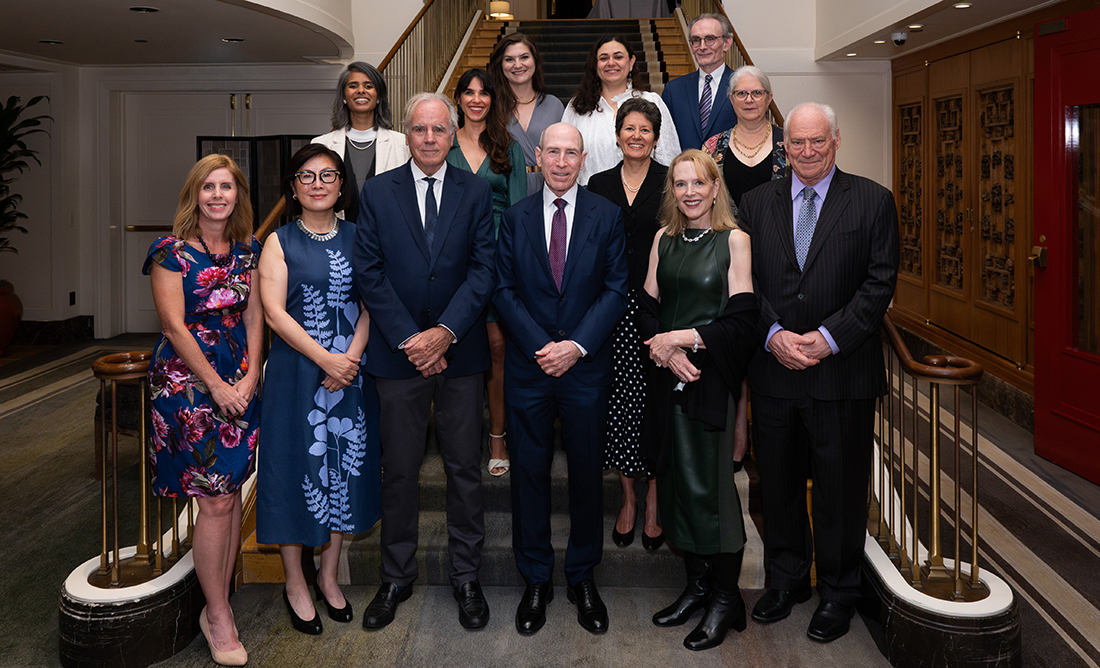
About 270 donors, members, and friends of the Robert J. Havey, MD Institute for Global Health attended the institute’s 19th annual benefit dinner at The Peninsula Chicago Hotel on September 16, celebrating continued successes as well as new initiatives bringing renewed hope to communities in need around the world.
For almost 20 years, the Havey Institute for Global Health has sought to close healthcare gaps in low- and middle-income countries through leading-edge research and hands-on training for local workers, bringing knowledge, resources, and more equitable access to populations that have long faced barriers to quality care. Philanthropy underpins all aspects of this work, supporting elective rotations for medical students and residents as well as research led by faculty across a wide variety of specialties at Northwestern University Feinberg School of Medicine.
“Every partnership, every center, every mobile clinic pulling up to a village that’s never seen one before, every new scientific discovery, every new technology—it all exists because people in a room like this one decided this work matters enough to invest in,” Robert J. Havey, ’80 MD, ’81, ’83 GME, deputy director of the institute and a clinical professor of Medicine, said in remarks at the dinner.
Global health workforce shortages, antimicrobial resistance, and the socioeconomic impacts on biological age remain high-priority areas of focus for the institute. Among accomplishments from the past year, the institute recently launched an effort to strengthen and improve Malawi's radiology workforce, where just two radiologists serve a population of 20 million. The goal is to quadruple the country's diagnostic imaging capacity by expanding training and support for healthcare workers. In 2025, the institute received a $1 million gift to support antimicrobial resistance research, an increasing area of concern as the WHO has estimated that bacteria resistant to antibiotics, antivirals, antifungals, and anti-parasitics will cause approximately 10 million deaths per year by 2050. Additionally, in countries like Nigeria, the institute has been working to improve research and clinical infrastructure through renewable energy projects.
In 2026, the institute opened its doors to the Center for Global Neurology under the leadership of Farrah J. Mateen, MD, PhD, chief of the Division of Multiple Sclerosis and Neuroimmunology in the Ken and Ruth Davee Department of Neurology and the Dr. Charles L. Mix Research Professor of Neurology. The need is profound, she said, as neurological disorders are among the world's leading causes of disability, yet relatively few neurologists work in global health.
Throughout her own career, Dr. Mateen has visited the Republic of Guinea more than 20 times to treat patients and to build a local network of neurology providers against a challenging backdrop of political instability and recurring Ebola outbreaks. She said she is excited by the unique opportunity for Feinberg residents and fellows to train in under-resourced settings and, through the Havey Institute for Global Health’s partnerships, expertise, and technologies, even bring care to underserved communities in their home countries, as alumni have done in Chad and Niger.
“Our trainees have expressed significant interest in doing impactful work in global neurology,” Dr. Mateen said. “Through our Center for Global Neurology and the Havey Institute, we can design opportunities for them to learn in resource-limited settings, establish lasting partnerships, and bring those experiences back to benefit patients wherever they practice.”
Trainees who spoke at the dinner and in prerecorded video messages captured the spirit of education imbued across the institute’s programs.
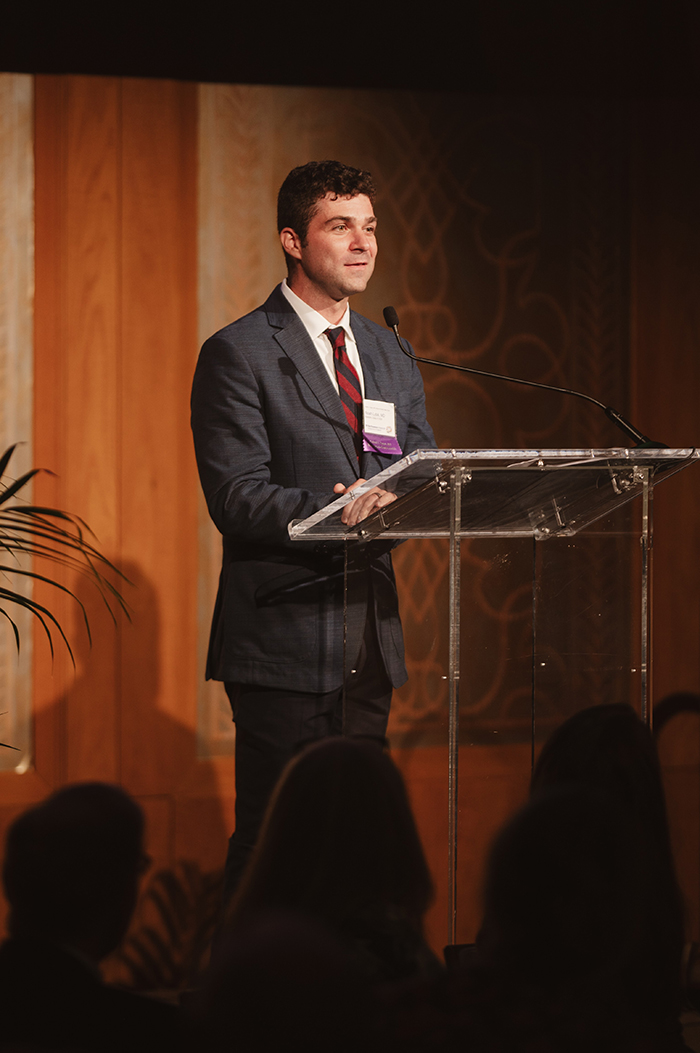
During his third year of residency in spring 2026, Noah E. Lybik, MD, now an instructor in the Division of Hospital Medicine in the Department of Medicine, worked in a clinic in rural Bolivia thanks to the Havey Institute for Global Health. He and another resident served as the only primary care physicians for the community of Palacios, treating common ailments such as hypertension and diabetes as well as diseases rarely seen in Chicago, such as dengue and chikungunya. The cases that stuck with him most, he said, were those that resulted in patients being able to return to their everyday lives—such as a farmworker whose treatment for diabetic neuropathy enabled him to return to his livelihood and provide for a son with a disability.
“Good medicine begins with asking not only ‘What is the diagnosis?’ but ‘Who is this person, and what matters most to them?’” he said. “That lesson was only possible because of people like you. Your generosity didn't simply send me to Bolivia—it entrusted me with the privilege of caring for a community that welcomed me into their lives. In doing so, it shaped the physician I am becoming, and it will continue to shape the care I provide to every patient I meet.”
Acclaimed broadcast journalist Bill Kurtis emceed the benefit dinner and narrated a short documentary, streamed during the event, which highlighted the institute’s work over the past year. Northwestern leadership in attendance included Feinberg Dean Eric G. Neilson, MD, and First Lady Kei Hui, MD.
For more information, please contact Jenn Burke at jennifer.burke@northwestern.edu or 312-503-4635.