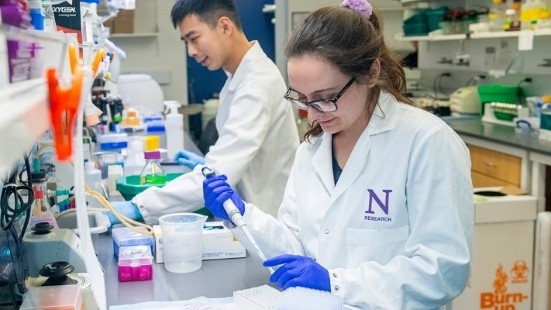
Our Research
The Simpson Querrey Lung Institute for Translational Science (SQLIFTS) at Northwestern University Feinberg School of Medicine is developing innovative therapies to treat patients with lung disease as well as a range of other diseases. Explore our research specializations to see what sets us apart from other lung institutes.
Research Areas
Lung Aging
SQLIFTS investigators are collaborating on a project to understand why age is the single most important risk factor for the development of acute and chronic lung diseases. Funded through a substantial, collaborative grant from the National Institute on Aging, our investigators seek to identify therapies that target fundamental pathways of aging to improve lung health. This project is led by institute director Scott Budinger, MD.
About Lung Aging Project
Lung Regeneration
What if we could make the lung regenerate after injury? A large collaborative grant from the National Heart, Lung, and Blood Institute led by SQLIFTS investigators seeks to identify pathways that can be targeted to promote lung repair after viral pneumonia. This project is led by Karen Ridge, PhD.
About Lung Regeneration Project
Lung Transplantation
A multi-investigator project in SQLIFTS seeks to understand why all lung transplant recipients eventually reject their lungs. This multidisciplinary program funded through a grant from the National Heart, Lung, and Blood Institute is strongly rooted in the Northwestern Medicine Lung Transplant Program, which is well known for its clinical innovation. This project is led by Ankit Bharat, MD.
About Lung Transplantation Project
Pneumonia
Pneumonia is one of the leading causes of death from infectious disease worldwide. Richard Wunderink, MD, of SQLIFTS leads a collaborative project called the Successful Clinical Response in Pneumonia Therapy (SCRIPT) Systems Biology Center to understand why pneumonia therapies fail in some individuals and how we can improve survival.
About SCRIPT
Lung Health
Ravi Kalhan, MD, leads an observational research program focused on lifecourse transitions from respiratory health to chronic lung disease. In partnership with the American Lung Association, the Lung Health Cohort is the first-ever large-scale lung health study that will track 4,000 young adults (aged 25-35) at the age of peak lung health to identify predictors of a loss of lung function later in life.
About Lung Health Cohort
Neu-Lung Consortium
Investigators led by Benjamin Singer, MD, Alexander Misharin, MD, PhD, and Stephanie Eisenbarth, MD, PhD, seek to identify mechanisms that determine how lung neutrophils drive tissue injury, inflammation, and repair in patients with severe pneumonia, lung transplant, and asthma.
About Neu-Lung
Research Opportunities
T32 Training Program
Kimberly Querrey Fellowship
The Kimberly Querrey Fellowship in Data Science is designed to support the training and career development of exceptional MD or PhD graduates on their path to becoming successful academic leaders in the application of artificial intelligence and machine learning to biomedicine.
Learn More about the Fellowship
Summer Research Program
The Kimberly Querrey Summer Research Program provides a research experience for rising high school seniors and undergraduate students interested in the biological sciences. Find out more about the experience and application details.
Summer Research Program
Publications and Code Repositories
Publications
Through our selected publications, learn more about key findings from SQLIFTS, including discoveries related to COVID-19, lung cancer, and healthcare disparities.
Our Research Impact
At SQLIFTS, we pursue high-impact research with the ultimate goal of improving patient care and saving lives in Chicago and beyond. For patients and their loved ones, now and in the future, the true value of our work is incalculable. We invite you to learn more about the impact of our research.
Read about our impact