| Epilepsy is a common condition, affecting as much as 1 percent of the population of the United States. It takes many forms and affects individuals in many different ways. Epilepsy is not a single disease but may be thought of as a condition of recurrent seizures caused by any one of numerous underlying processes, which periodically interrupt the normal functioning of the brain. A seizure is an episode of abnormal synchronized excitation of brain cells. In certain conditions, seizures can happen to anyone, but in people with epilepsy, the "threshold" conditions which allow them to occur are abnormally lowered. Therefore, the goal of all treatment for epilepsy is to raise this threshold back to a point at which seizures no longer occur in people’s everyday lives. While most people with epilepsy achieve satisfactory control of their seizures using medication alone, there still exists a large number for whom medication does not achieve this goal. Some of these people may benefit from a surgical procedure to improve control of their epilepsy and enhance the quality of their lives. Epilepsy surgery is not new. The first successful operation for epilepsy was performed in 1886, and such treatment became common in the middle part of the twentieth century. With tremendous advances in surgical technique and diagnostic tools such as MRI and CT, the past two decades have seen a significant increase in our ability to identify people with epilepsy who might benefit substantially from surgical treatment, as well as in the ease and safety of carrying out the procedures. Not everyone with epilepsy can benefit from a surgical procedure. Although the number of people who can be helped in this way is increasing, a strict set of criteria exists that must be met if surgery is to be considered as a treatment option. With few exceptions, the following conditions must be fulfilled: - The epilepsy must be of a type known as "partial" or "focal," with or without generalized seizures as well.
- The seizures must be resistant to reasonable efforts at control with medication.
 - The proposed surgical procedure must carry a sufficiently low risk of causing unacceptable neurological impairment.
- Epilepsy must be the person’s most disabling medical problem.
The manner in which these criteria are applied to any individual with epilepsy is a matter for careful discussion between that person, his or her physician, and a neurologist or neurosurgeon knowledgeable about surgery for epilepsy. In the right circumstances, surgery can have dramatic results, but all surgery carries associated risks and the decision to proceed should be made carefully. Northwestern provides complete services to help with this decision as part of the Northwestern Comprehensive Epilepsy Program.
After a decision is reached that surgery may be a reasonable choice for control of a person’s epilepsy, the prospective patient is enrolled in a four-phase program designed to determine what type of surgery would be most appropriate, as well as to assess the probable success and potential risks of that procedure. At Northwestern Memorial Hospital, this pre-surgical screening is divided into three distinct phases (the fourth phase being the final surgery itself, should it proceed). The program is organized and carried out by a closely integrated team of specialists, including neurologists, neurosurgeons, neuropsychologists, and radiologists. Depending on each person’s particular situation, it may be necessary to undergo only one or all three of the screening phases. The team is rounded out by nurse specialists, program coordinators, and social workers whose role it is to guide each person through this process by providing information, support, and assistance.
- Phase I. This initial part of the program determines whether the patient’s seizures are of a type appropriate for surgery and supplies information about the location in the brain from which they originate. It usually requires a period of admission to the Neurological Testing Center during which continuous EEG and video monitoring are performed to accomplish these tasks. The stay may last several days or longer, depending on each person’s frequency and type of seizures. Sometimes seizure medications are withheld or altered during this period.
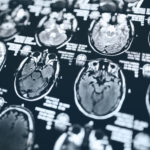
- Phase II. Special imaging studies, including high-resolution MRI scans, functional MRI scans, or other tests help locate and identify the type of process causing the seizures. The locations of vital functional parts of the brain which must be protected may also be mapped. A series of neuropsychological tests assists the team of specialists with this critical mapping information. Sometimes, a special test called a carotid amobarbital or "Wada" test must be performed. This test includes an angiogram (blood vessel X-ray performed in the Department of Radiology) and is used to further help locate functions such as memory and language.
- Phase III. In a small group of patients, the information collected in Phases I and II is either insufficient to make a decision about the feasibility of surgery, or appears contradictory and further data is required to make necessary decisions. To proceed with the evaluation, it is then necessary to obtain electrical recordings of seizure activity directly from the surface of the brain. This is accomplished through a surgical procedure (designed to acquire information, not to control the seizures) following which the patient, with the electrodes in place, undergoes a second period of EEG and video monitoring as in Phase I. Although surgery is necessary to place the electrodes, there is little discomfort during the monitoring period, and in most cases the electrodes are removed at bedside when the needed information is obtained.
- Phase IV. This is the stage at which the actual operation for control of seizures occurs. A selection about the type of surgery is made according to the information collected in Phases I-III and after careful discussion between the patient, his or her family, and the epilepsy surgery team.
The experience of surgery is different for each individual. Usually, the operation is performed some weeks after the completion of the screening process, but the exact time may vary considerably and usually may be done at the convenience of the patient. Most operations for epilepsy allow admission to the hospital on the morning of surgery. The operation usually takes several hours, but the exact length varies depending on many factors. Specialized instruments including ultrasonic tools and the operating microscope may be required. After surgery, patients are cared for overnight in the intensive care unit. Most people feel well enough to be out of bed the following day. Many people return home between the third and fifth day following the operation, and most require little pain medication. All patients remain on the same types and amounts of anti-epileptic drugs which they were taking when they entered the hospital. Because surgery may temporarily irritate surrounding parts of the brain and because the body is often accustomed to years of medical treatment, these medicines must be tapered cautiously with the guidance of one of the team neurologists. Because seizures are not predictable events and because changes in both medical and surgical therapy for seizures may affect their occurrence in many ways, the success of a surgical procedure in controlling epilepsy is judged after one to two years have passed. Therefore, seizures occurring early after surgery do not necessarily indicate that the operation has failed, nor does the absence of seizures for several months guarantee that they will not return. No surgical procedure is risk-free. An operation for epilepsy is major surgery, and the potential risks include those of any major surgery, those of brain surgery, and those pertaining to epilepsy surgery in particular. Any major surgery carries the risk of unexpected reactions to anesthesia or medications, or other unexpected events which may cause major injury or death. The experience of many surgical centers over many years shows that the risk of death from surgery for epilepsy is less than 1 percent, and the risk of stroke or coma less than 2 percent. While these numbers mean that the risk of epilepsy surgery is extremely small, it is not zero. Additional risks of bleeding or infection, or re-operation for a complication such as a blood clot, also exist and affect about 2 percent of patients, although for Phase III electrode placement the risk of infection is slightly higher at 5 percent. These complications are usually easily treated. Any brain surgery carries risks of damage to nerves or blood vessels, which may cause stroke or neurological impairments that may be either temporary or permanent. The risk of such complications, while very small, varies according to the type of procedure and is different for each individual. Finally, surgery for epilepsy carries a risk of failure, that is, continued seizures. This risk also varies according to the type of procedure and the cause of the seizures and is different for each individual. Thus, although surgery for epilepsy is among the safest and most effective types of brain surgery performed, the risks involved should be carefully discussed by the patient, his or her family, and the surgeon. A decision to proceed with surgery must be based on a clear knowledge of the potential benefits weighed against these potential risks. No one should agree to this or any other surgical procedure unless he or she is satisfied that all treatment options have been considered, and that all questions regarding the procedure have been answered as fully and accurately as possible. In 1998 vagus nerve stimulators were approved by the FDA for treatment of intractable seizures. These stimulators, similar in appearance to a pacemaker for the heart, are implanted under the skin near the collar bone with a wire going into the neck, where it stimulates the vagus nerve, one of the 12 "cranial nerves" which exit directly from the brain without going through the spinal cord. This procedure is available at Northwestern for selected patients. In general, these are patients who are not candidates for other types of surgery or who have not had adequate seizure control for other reasons. The device reduces seizures by 50 percent in about 30 percent of patients. Because its effectiveness is limited and side effects do occur, vagal nerve stimulation is not a replacement for other types of surgery but can be very helpful in people for whom other options are unacceptable.
Recent studies in Europe have suggested that the Gamma Knife may be used in some patients with intractable seizures instead of open surgery. The Gamma Knife uses non-invasive technology to treat targets inside the brain, and greatly improves patient comfort. No incisions are made and the procedure involves only an overnight stay in the hospital. A multicenter clinical trial of this technique is expected to begin in late 1999 or early 2000, and Northwestern will be the only center in the Midwest offering participation in this study.
For certain people with epilepsy, surgery is a safe and effective treatment option to be considered when medication alone cannot bring seizures under adequate control. This surgical option is provided at Northwestern Memorial Hospital as part of the overall program of comprehensive care for people with epilepsy. We regard patient and family education as an important part of this program, and welcome any questions or inquiries concerning epilepsy surgery, care for people with seizure disorders, or our services. Return to main clinical divisions webpage
Return to top of page
| |