Director's Message
 Our mission is to catalyze interdisciplinary research collaborations to understand the biological bases of autism and related neurodevelopmental disorders and to facilitate the translation of this knowledge into new treatments.
Despite the alarmingly high rate of diagnosis of autism and related neurodevelopmental disorders, the development of treatments has proven extremely difficult, largely because their biological bases are not well understood. In particular, how neurodevelopment goes awry in autism and related disorders is only beginning to be revealed. Fortunately, however, recent exciting developments in human genomics and neurobiology promise to offer the key to this knowledge. Over the past few years, many genetic causes of autism and related disorders have been found, which could provide insight into its neurobiological bases. The next major challenge is to understand the function of these genes in shaping brain circuit development and how their dysfunction may derail neurodevelopment. More importantly, these genes and neurodevelopmental processes could serve as targets for new drugs aimed at treating autism and related disorders.
At this exciting and promising time in science and medicine, the Center for Autism and Neurodevelopment brings together basic and clinician scientists from a broad range of fields to create a critical mass of investigators who interact synergistically with the common goal of understanding the neurodevelopmental process that goes awry in autism and related disorders and capitalize on this knowledge to develop new treatments. The Center for Autism and Neurodevelopment aims to achieve national and international impact by bridging basic, translational and clinical disciplines by providing an umbrella for scientific collaborations that would be difficult to establish without a facilitating entity, by helping to train the next generation of investigators and clinicians in the fields of autism and neurodevelopment and by educating the community at large about the most cutting-edge research in the field of autism and neurodevelopment.
Our scientists employ a multi-pronged strategy to investigate the neurodevelopmental bases of autism and related disorders. Several projects focus on the basic physiology of neurodevelopmental processes relevant to autism, such as synapse development, plasticity and neuronal excitability. Other projects investigate the translational physiology of mouse and human neuronal models of autism and related neurodevelopmental disorders. Translational projects investigate human neuroanatomical features of neurodevelopmental disorders through brain imaging, aim to understand the relationships between patient clinical features and their genetic makeup and pursue the discovery and development of new drugs or the repurposing of FDA-approved drugs for autism and neurodevelopmental disorders. Finally, several projects investigate comorbid disorders, such as seizure disorders and epilepsy.
Unique strengths of our center at the national and international levels include the critical mass of leading scientists in neuronal physiology, synaptic biology, ion channel biology, neuronal excitability and its disorders, microscopic and human brain imaging, and neuroproteomics and drug discovery.
In summary, by virtue of its excellent scientists, multidisciplinary research strategy and its unique strengths, the Center for Autism & Neurodevelopment is poised to achieve major breakthroughs in understanding the cause and developing treatments for autism and related neurodevelopmental disorders.
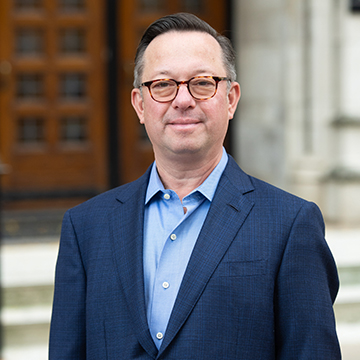
Peter Penzes, PhD
Ruth and Evelyn Dunbar Professor of Psychiatry and Behavioral Sciences
Professor of Neuroscience, Pharmacology and Psychiatry and Behavioral Sciences