
OCTOBER 2026 NEWSLETTER
The newsletter of the Feinberg School of Medicine Research Office
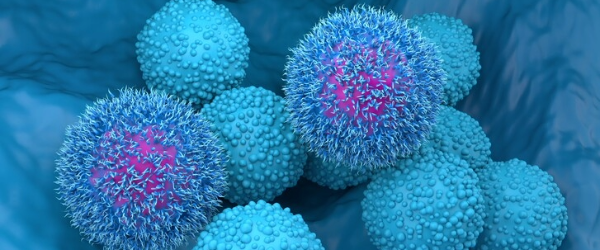 |
Developing New Strategies to Fight Pancreatic Cancer |
|
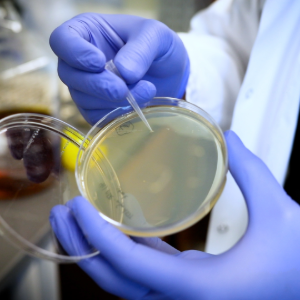
“If you work in oncology you have to work on difficult problems, because cancer is an extremely difficult problem.” That’s according to Leonidas Platanias, MD, PhD, the director of the Robert H. Lurie Comprehensive Cancer Center of Northwestern University. Pancreatic cancer has proven to be one of the most difficult cancers to treat, Platanias said. Because it often displays no symptoms, spreads aggressively, and is notorious for shielding itself from the immune system, it’s just the sort of difficult problem that investigators at Feinberg are eager to take on. |
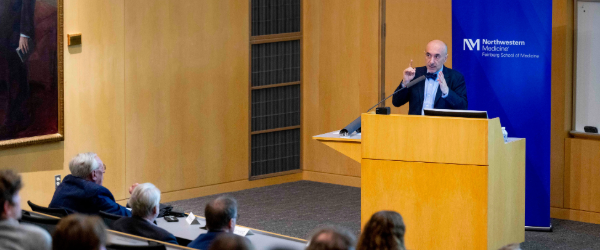 |
Pioneering Physician-Scientist Delivers 2026 Nemmers Prize Lecture |
|
Jean-Laurent Casanova, MD, PhD, the recipient of the 2026 Mechthild Esser Nemmers Prize in Medical Science, known for his discovery of human genetic and immunological determinants of infectious diseases, visited campus to deliver the Nemmers Prize lecture on September 30. |
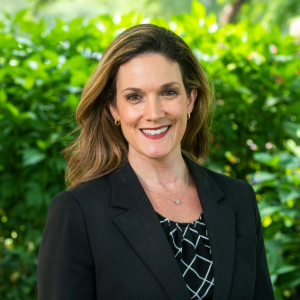
Faculty ProfileStudying Psychosocial Factors that Influence Aging and DementiaEileen Graham, PhD, is associate professor of Medical Social Sciences in the Division of Social Determinants of Health. Her research focuses on the development of personality traits over the life course, and how these traits may influence physical health, onset of disease, cognitive decline and mortality. |
|
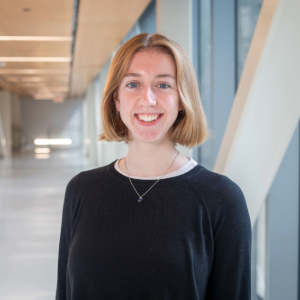
Staff ProfileImproving Interventions for Cancer SurvivorsFiona Webb is a research study assistant supporting the Exercise and Health Lab in the Department of Preventive Medicine at Feinberg. She is currently working on a clinical trial that examines how social support and mindfulness-based strategies can promote physical activity among breast cancer survivors. |
|
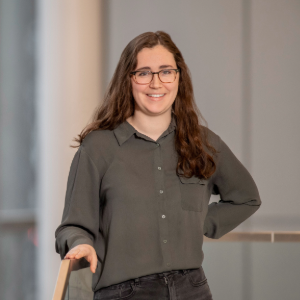
Student ProfileExamining How Circadian Rhythms Influence MetabolismAnneke Thorne is a PhD candidate in the Driskill Graduate Program in Life Sciences. In the laboratory of Joseph Bass, MD, PhD, Thorne’s work centers on how specialized fat cells burn energy to generate heat, a process known as adipose tissue thermogenesis. |
|
Research NewsFeinberg Research Funding Tops $750 MillionPrincipal investigators at Feinberg secured $758 million dollars in research funding and awards during the 2025-26 fiscal year, accounting for more than 74 percent of Northwestern University’s more than $1 billion in research funding. This funding supports research projects that advance basic science, clinical research and translational developments. |
|
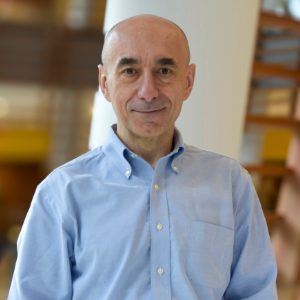
Breakthroughs PodcastHow Our Genes Predispose Us to Infection with Jean-Laurent Casanova, MD, PhDIn this episode, Jean-Laurent Casanova, MD, PhD, winner of the 2026 Nemmers Prize, discusses his paradigm-shifting discoveries and what they reveal about immunity, genetic predisposition and why some people develop life-threatening infections while others do not. |
|
Campus Events |
||||||||
|
Research in the NewsCrain's Chicago Business — New Treatment Could Temper One of GLP-1s' Bigger Downsides, Northwestern Research Finds with Joseph Bass, MD, PhD US News & World Report — Weight-Loss Meds Lead To Nutritional Deficits For Many Kids And Teens, Study Finds with Justin Ryder, PhD HealthDay — Congenital Ichthyosis Linked to Allergic Disorders with Amy Paller, MD |
NUCATS CornerMake Your Research More Transparent and Reproducible with StatWrapStatWrap, developed by NUCATS, is a free and open-source research support tool designed to help teams document projects, organize metadata and identify sources of variation that may impact reproducibility. By creating an automated inventory of project assets and workflows, StatWrap makes it easier to manage and communicate research processes. Try it for yourself: Explore StatWrap |
|
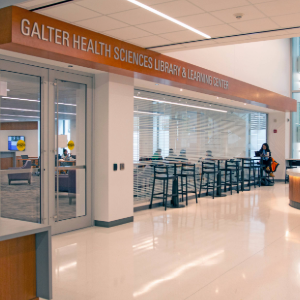
Galter LibraryBeyond the Systematic Review: Why Every Type of Evidence MattersAsk a room of health sciences investigators what type of review they should conduct, and many will answer the same way: a systematic review. Over the past decade, systematic and scoping reviews have become the most recognizable forms of evidence synthesis. Their popularity has created an unintended consequence. Many scientists now believe they are the only review types worth pursuing. But Galter librarians disagree. |
|
Sponsored ResearchDefining the Role of Lymphatics in Pancreatitis PathogenesisBeatriz Sosa-Pineda, PhD, professor of Medicine in the Division of Nephrology and Hypertension, received a $2.9 million dollar grant from the National Institute of Diabetes and Digestive and Kidney Diseases to study the role of lymphatics in pancreatitis, which could shed light on the mechanisms to treat other inflammatory diseases. |

|
High Impact ResearchAbe C, Fujita SI, Shiba D, Tanaka K, Fujimoto C, Tokunaga S, Iwasaki S, Takahashi S, Muratani M, Morita H. Selective saccular plasticity under microgravity links peripheral transcriptomic remodeling to postflight vestibular dysfunction. Proceedings of the National Academy of Sciences of the United States of America. Sep 2026; 123(35):e2605593123. Abramson JS, Siddiqi T, Gordon LI, Lunning M, Wang M, Arnason J, Kamdar M, Maloney DG, Shadman M, Andreadis C, Sehgal A, Solomon SR, Ghosh N, Hidalgo-López JE, Wang J, Ding X, Ogasawara K, Singh A, Palomba ML. Five-year survival outcomes of lisocabtagene maraleucel in R/R LBCL from the TRANSCEND NHL 001 study. Blood. Sep 2026; 148(11):1388-1393. Al-Dalakta A, Tabaja C, Alqahtani M, Wang TKM, Imazio M, Cremer PC, Luis SA, Lazaros G, Klein AL. From Hippocrates to Biologics, The Evolving History of Pericarditis: A Review. Circulation. Sep 2026; 154(13):1265-1275. Aman S, Su S, Xie W, Cui J, Siwicka ZE, Zhou X, Rosenmann ND, Kirlikovali KO, Shawkey MD, Farha OK, Gianneschi NC. Catalytic Porous Metallized Melanin for the Remediation of Organophosphorus Agents. ACS Nano. Sep 2026; 20(35):24429-24438. |
Featured CoreCenter for Advanced Molecular ImagingThe Center for Advanced Molecular Imaging (CAMI) was created to drive interdisciplinary research, bridging the gap between basic science and science-based medicine, with an emphasis on in vivo imaging. CAMI provides a wide range of imaging instrumentation and support facilities for molecular imaging of biological events in intact organisms. We can also assist with medical image analysis and visualization. Services Offered
Learn more about preclinical imaging and expertise. |
NIH Notices
|
Thank You For ReadingWe welcome your feedback. Please share it with us via email. |
|
|
