
October 2026 Newsletter
October 2026 Newsletter
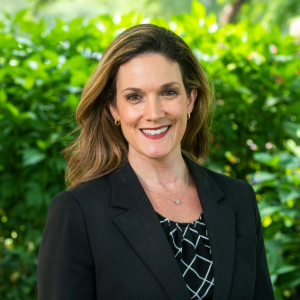
Faculty Profile
Eileen Graham, PhD, is associate professor of Medical Social Sciences in the Division of Social Determinants of Health. Her research focuses on the development of personality traits over the life course, and how these traits may influence physical health, onset of disease, cognitive decline and mortality.
What are your research interests?
My research focuses on how psychosocial factors and individual differences across the lifespan contribute to health and well-being in older adulthood. Specifically, I examine personality traits such as neuroticism and conscientiousness, alongside indicators of social connectedness, including loneliness and social isolation, to understand the mechanisms through which these factors shape cognitive aging, cognitive resilience and risk for Alzheimer’s disease and related dementias.
What is the ultimate goal of your research?
To improve our understanding of the modifiable factors that shape cognitive resilience and vulnerability, ultimately helping individuals maintain cognitive health as they age.
How did you become interested in this area of research?
As an undergraduate, I took a course on the aging mind that introduced me to the concept of cognitive resilience: the observation that some individuals remain cognitively intact despite substantial neuropathological burden, while others experience significant impairment despite relatively limited evidence of disease at postmortem examination. This paradox sparked a lasting interest in understanding why some people are more vulnerable and others more resilient to cognitive decline. As a psychologist, that interest evolved into a research program focused on identifying the individual psychological factors, including personality and social connection, that contribute to resilience and vulnerability across the lifespan.
What types of collaborations are you engaged in across campus (and beyond)?
My research is highly collaborative and spans multiple institutions. At Northwestern University, I collaborate with colleagues in the Department of Psychology to investigate inflammatory biomarkers as potential mechanisms linking psychosocial factors to cognitive resilience. I also work closely with the Rush University Alzheimer’s Disease Research Center, leveraging rich longitudinal datasets that include measures of personality, social connectedness, inflammation, cognitive functioning and postmortem neuropathological assessments. In collaboration with teams at Cornell University and UC Davis, I examine loneliness, social asymmetry and digital biomarkers of cognitive health. In addition, I partner with investigators at North Carolina State University to develop infrastructure and resources that support integrative data analysis across deeply phenotyped longitudinal studies of aging.
Where have you recently published papers?
I have recent papers published in Alzheimer’s and Demenita, Psychological Science, The Journal of Personality and Social Psychology, as well as The Journal of Gerontology: Psychological Sciences.
Who inspires you? Who are your mentors?
I am inspired by visionary thinkers and generous scholars who are deeply committed to mentoring the next generation of investigators. Within Northwestern University, my closest mentors and sources of inspiration are Daniel Mroczek and Judy Moskowitz. Beyond Northwestern, I have been greatly influenced by the scholarship and leadership of Graciela Muniz-Terrera (Ohio University), Lisa Barnes (Rush University) and Dave Almeida (Penn State University).
