Grand Rounds Seminar
Please join us for our upcoming Grand Rounds Seminars. Unless otherwise noted, Grand Rounds will be hybrid events with in-person & online options.
Zoom link: https://https://northwestern.zoom.us/j/98867210291
ID: 988 6721 0291
July 8: Diego A. Caban-Rivera, PhD
Probing Tissue Microstructure with Quantitative MRI: From Muscle Mechanics in Cerebral Palsy to Brain Connectivity After Stroke
TIME
12:00 p.m. (CST)
LOCATION
645 N. Michigan Ave., Rm. 800
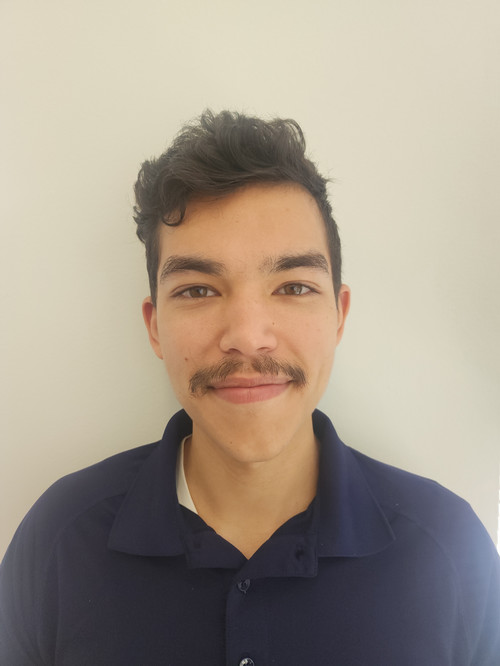 About: Diego Caban-Rivera is a Postdoctoral Scholar in the Department of Neurology at Northwestern University, where he works under the mentorship of Dr. Carson Ingo. He received his Ph.D. in Biomedical Engineering from the University of Delaware, where he trained with Dr. Curtis Johnson developing and applying anisotropic Magnetic Resonance Elastography (MRE) to characterize the mechanical properties of white matter and skeletal muscle across development and aging. His current research spans two areas: (1) investigating longitudinal changes in the diffusion properties of normal-appearing white matter in the cerebrum and cerebellum following stroke, and their relationship to cognitive outcomes; and (2) applying diffusion MRI and MR elastography to quantify muscle microstructure remodeling in individuals with cerebral palsy. His work has been published in Imaging Neuroscience and Clinical Biomechanics, and his research on post-stroke cerebellar microstructure is in press at the IEEE Engineering in Medicine and Biology Conference (EMBC 2026).
July 22: PACE Day ft. Phyllis Levine Dahlstrand, PT, DPT
Reach Out Responsibly
TIME
12:00 p.m. (CST)
LOCATION
645 N. Michigan Ave., Rm. 800
Abstract: Dr. Dahlstrand is very fortunate to have had a career she thoroughly loved which allowed for many opportunities to serve others. In her presentation, Dr. Dahlstrand will highlight her work in and around pro bono service. She will focus on community events across her years as a PT, culminating in her post-retirement work within the IPTA to develop PT Access. Dr. Dahlstrand will describe the program and give an overview of its impact to date. She will also share lessons learned from community service along the way and discuss the choices she regrets not making sooner.
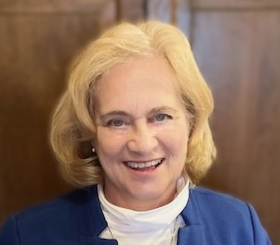 About: Dr. Phyllis Levine Dahlstrand earned her BS in PT from St. Louis University and her DPT from Rosalind Franklin University. Throughout a 47-year career, Dr. Levine Dahlstrand owned a private practice, taught as a guest lecturer and clinical instructor for local physical therapy schools, to medical students and orthopedic residents at Loyola, and as a speaker at numerous PT, Orthopedic, and Athletic conferences and community groups. Throughout her years of clinical practice, Dr. Levine Dahlstrand had numerous opportunities to share her expertise in physical therapy for community activities. She is currently the chair of the Illinois Physical Therapy Association Pro Bono Committee which has developed and implemented PT Access. This program connects low income, uninsured people in need of physical therapy to volunteering outpatient clinics in or near their communities. In recognition of this body of work, she was awarded the IPTA Societal Impact Award in 2024.
PACE Day Schedule of Events:
Presentation with Dr. Phyllis Levine Dahlstrand PT, DPT
12:00-1:00PM (In-person & Online)
Department of Physical Therapy & Human Movement Sciences
645 N. Michigan Ave., Chicago, IL 60611
*8th floor
Community & Service Work Presentations
Presented by 2nd-year DPT Students
1:00-3:00PM (In-person only)
Department of Physical Therapy & Human Movement Sciences
645 N. Michigan Ave., Chicago, IL 60611
*7th floor
Upcoming Grand Round Seminars
July 8, 2026: Diego A. Caban-Rivera
Postdoctoral Fellow PTHMS
PACE Day | July 22, 2026: Phyllis Levine Dahlstrand, PT, DPT
Chair of the Illinois Physical Therapy Association, Pro Bono Committee
September 16, 2026: Lisa Meeks, PhD, MA
University of Illinois College of Medicine