
DECEMBER 2025 NEWSLETTER
The newsletter of the Feinberg School of Medicine Research Office
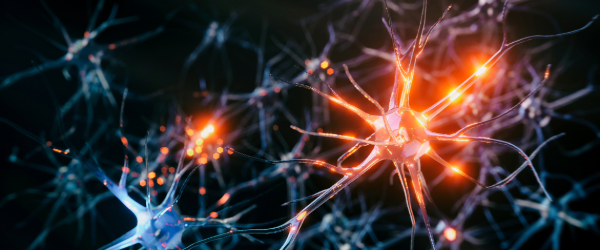 |
Elucidating Brain Communication Networks |
|
The human brain is often described as the most complex network in existence, with billions of neurons exchanging signals across intricate pathways. Recent research led by Feinberg investigators is revealing how different regions of the brain coordinate and process information, and how disruptions in these networks can impact health. |
 |
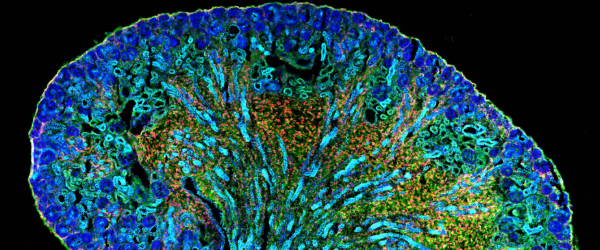
Arvanitis Honored with International Leadership Award |
|
Constadina (Dina) Arvanitis, PhD, director of Feinberg’s Center for Advanced Microscopy, has been honored with the 2025 Royal Microscopical Society (RMS) Vice President’s Award for her outstanding leadership and service to the global scientific imaging community. |
 |
Top 3 Episodes of Breakthroughs Podcast in 2025 |
|
This year, the Breakthroughs podcast released 17 episodes on topics including improvements in mental healthcare delivery, precision medicine therapies for rare diseases, an introduction to bedside medicine and much more. |
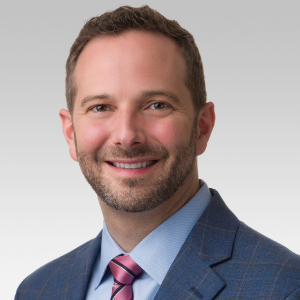
Faculty ProfileImproving Treatment and Patient Outcomes for MeningiomasStephen Magill, MD, PhD, is an assistant professor of Neurological Surgery. As a physician-scientist, his research and clinical care are focused on improving treatment and outcomes for patients with meningiomas, pituitary and skull base tumors. |
|
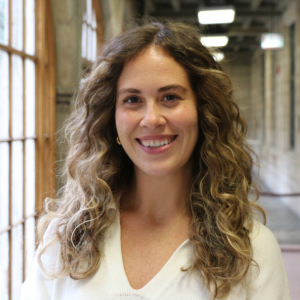
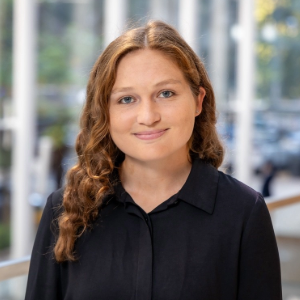
Staff ProfileSupporting NUCATS ProgrammingMorgan Barrowman is senior project coordinator within the NUCATS Center for Education & Career Development. In her role, she supports investigators through career development programs and seminar series designed to help scientists succeed. |
|
Student ProfileStudying Nanotechnology-based Cancer TherapiesCaylee Silvers is a PhD student in the Driskill Graduate Program in Life Sciences (DGP). After studying tumor development during her time at the University of Wisconsin–Madison, Silvers came to Northwestern to pursue research on cancer immunotherapy. |
|
Campus Events |
||||||||
|
Research in the NewsTIME, December 3 NBC, November 13 CBS Chicago, November 25 |
NUCATS CornerWhat's Your Big Idea?What are the key pain points or roadblocks preventing us from delivering healthcare innovations to all patients more quickly? Northwestern is crowdsourcing ideas from across our community to help decide which projects to support next.
Your feedback will inform a new funding opportunity from the NUCATS Institute that will be announced later this academic year. |
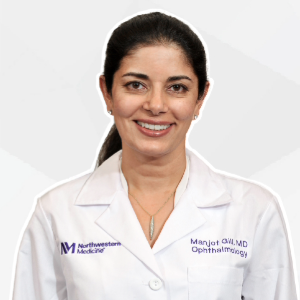
Breakthroughs PodcastAdvancing Health and Longevity by Analyzing the Retina with Manjot Gill, MDIn this episode, Gill explains the unique multi-disciplinary approach of the Human Longevity Lab and how she is using AI in retinal imaging to predict biological age and help validate interventions that may slow aging. |
|
New FacultyWilton Snead, PhD, joined as assistant professor of Cell and Developmental Biology in May 2025. Previously, he was a postdoctoral fellow at Duke University. He earned his PhD from University of Texas at Austin, and his research investigates the biophysical mechanisms that control RNA processing and localization within cells. His lab is interested in how biomolecular condensates, which are concentrated collections of interacting proteins and RNAs, regulate key stages of the RNA lifecycle from transcription to translation. |

|
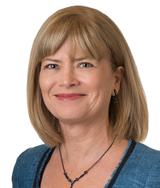
Sponsored ResearchRewiring Metabolism to Restore Stress Adaptation in Darier DiseasePI:Kathleen Green, PhD, Joseph L. Mayberry, Sr., Professor of Pathology and Toxicology Professor Sponsor: LEO Foundation |
|
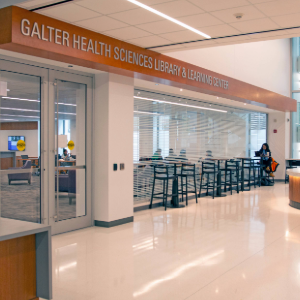
Galter LibraryManaging Your Research Identity: Why ORCID and Persistent IDs MatterMany journals already require ORCIDs at submission, and U.S. federal funding agencies are increasingly integrating ORCID into grant workflows. The National Institutes of Health will require use of federal Common Forms for biosketches and current and pending (other) Support, generated through SciENcv starting January 25, 2026 (NOT-OD-26-018). |
|
Featured CoreParkinson’s Disease and Movement Disorders Center BiorepositoryThe Parkinson’s Disease and Movement Disorders Center Biorepository is a data and biospecimen repository that stores demographic and clinical information and biological samples from patients and healthy controls evaluated at the Regenstein Center for Neurological Care at Northwestern Memorial Hospital. Services OfferedThe following de-identified biospecimens linked to detailed clinical information are available for research. Please contact the study Principal Investigator for details on sample availability.
|
Funding Opportunities
|
NIH NewsImplementing a Unified NIH Funding Strategy to Guide Consistent and Clearer Award Decisions Today, NIH has implemented steps towards a unified strategy that will help guide clearer and consistent funding decisions across all Institutes, Centers, and Offices (ICOs). Building on the August NIH Director’s statement, this framework (effective January 2026 Council round) will help ensure we continue to support the most scientifically meritorious research ideas possible, address health priorities, and support a robust biomedical workforce. More details on the core tenets are shared on NIH’s Funding Decisions webpage. Individual ICO webpages that previously reported similar information will be redirected to this central page. Emergency Modifications to NIH Peer Review NIH plans to review all applications submitted for the January 2026 Councils (e.g., applications that were submitted to due dates in summer 2025) and maintain the quality of review (NOT-OD-26-012). Over 370 peer review meetings were cancelled between October 1, 2025 and November 14, 2025. These meetings had enlisted more than 11,000 reviewers to review more than 24,000 applications. We are currently rescheduling these study sections, as peer review of applications is required before making awards. In doing so, we:
|
Thank You For ReadingWe welcome your feedback. Please share it with us via email. |
|
|
