
August 2026 Newsletter
August 2026 Newsletter
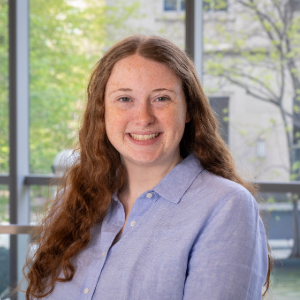
Student Profile
Grayce Mores is a PhD candidate in the Driskill Graduate Program in Life Sciences (DGP). She completed her Bachelor of Science at Louisiana State University.
In the laboratory of Alan Hauser, MD, PhD, professor and vice chair of Microbiology-Immunology, Mores studies host-pathogen interactions and how microbes adapt to the body during infection.
Where is your hometown?
My hometown is New Orleans, Louisiana.
What sparked your interest in science or medicine?
I've always been interested in the intricate workings of the human body, but I found a particular fascination in disease. How could something like a virus, that isn't even alive, wreck such havoc on our systems? I was especially drawn to the history of infectious disease and how outbreaks have shaped human history not only biologically, but socially, economically and in our pursuit of knowledge. I had the chance to study the Epstein-Barr virus while I was still in high school, and I found my passion for infectious disease research. One of my favorite parts of working as a researcher is that you never stop learning as you continue to push the bounds of scientific knowledge.
What are your research interests?
My research interests center on host-pathogen interactions, particularly how microbes interact with and adapt to the human body during infection. I am also interested in the broader context of disease, including how it influences culture, communication and public understanding of science. I'm especially drawn to interdisciplinary spaces such as bioethics and science communication, where complex science can be translated to become more accessible and meaningful to diverse audiences.
What are you currently working on?
My current project focuses on a rare and severe presentation of Pseudomonas aeruginosa sepsis known as Shanghai fever. Unlike typical P. aeruginosa infections, which are often associated with hospital settings and immunocompromised patients, Shanghai fever occurs in previously healthy children with no known immunodeficiency. These cases appear to involve unusually virulent strains of the bacterium. My research aims to investigate whether genetic or transcriptional differences in these strains contribute to their increased virulence, with the goal of better understanding the mechanisms underlying this atypical disease presentation.
Please tell us about a defining moment in your education at Feinberg thus far.
A defining moment in my education at Feinberg has been working with the Chicago Graduate Student Organization to create fun and enriching experiences for students on campus. I initially joined as a way to meet people outside of my program, and it really helped me connect to graduate students across a variety of interests, from theater to genetic counseling to hospital management. This experience really highlighted the importance of community-building in academia and creating spaces where students feel safe to talk about the uncertainties and challenges of research. This work has also shaped my post-graduate career choices as I want to be someone who not only generates knowledge but also helps create inclusive spaces where others can learn, connect and thrive.
What do you hope to do with your degree?
After graduating, I hope to pursue a career in advanced biology education at either the collegiate or upper high school level. My own early exposure to research was critical in shaping my interest in science, and I hope to create similar opportunities for future students. I am particularly interested in teaching courses in microbiology, research methods and bioethics, where I can highlight the intersections among science, communication and humanities. I hope to help students not only engage with science but learn how they can help shape the future of research.
