September 2026 Newsletter
September 2026 Newsletter
Student Profile
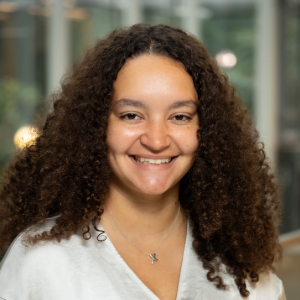
Allegra Minor is a PhD candidate in the Driskill Graduate Program in Life Sciences. In the laboratory of Lillian J. Eichner, PhD, assistant professor of Biochemistry and Molecular Genetics, Minor’s work focuses on cellular senescence, a permanent form of cell cycle arrest, and utilizing it a strategy to control tumor growth. Allegra was recently selected as a Bouchet Graduate Honor Society inductee.
Where is your hometown?
Chicago. I grew up in the Hyde Park/Kenwood area.
What sparked your interest in science or medicine?
As a kid I was always really curious about how stuff worked and why things worked the way they did. I was always trying to push the boundary of my understanding and was fascinated by how much you could break a system before no longer being able to put it back together. I think kids like that are often pushed towards science or engineering and maybe not so coincidentally, I've been trained in both. My interest in cancer started after two close family members were diagnosed with cancer in a very short timeframe; one received a diagnosis that was pretty much universally viewed as a death sentence while the other was essentially told their diagnosis was little more than a blip in their health history. I was pretty much immediately curious about why the prognoses were so different when up until that point, I had thought of cancer as one disease. I've been motivated to contribute to our understanding of cancer and its treatment ever since.
What are your research interests?
Broadly, I am interested in studying mechanisms of tumor suppression and how we can bring together orthogonal models and techniques to elucidate novel therapeutic opportunities. Right now, I'm using a combination of metabolic, transcriptomic, and gene editing approaches to study a very aggressive form of lung cancer.
What are you currently working on?
I focus on a cellular program known as senescence, which is a state in which cells undergo growth arrest (stop dividing/proliferating) but continue to be active in their environment by engaging the immune system, signaling to other cells, and producing molecules that can alter the niche in beneficial or deleterious ways. If we think about a tumor, which at its core is a group of cells dividing uncontrollably, we can see how pushing these cells toward this senescent state might be a viable therapeutic avenue; I am trying to figure out how to do this in an aggressive form of lung cancer known as KRAS, LKB1 mutant lung adenocarcinoma.
Please tell us about a defining moment in your education at Feinberg thus far.
I don't think my time at Feinberg can be distilled down to one defining moment. Every moment from Research in Progress talks at the Lurie Cancer Center to coffee breaks with my lab mates and trainee roundtables with some of the greats have culminated in an invigorating and supportive training experience. Northwestern is an incredible place to study cancer, not only because of the caliber of the science, but the humility and approachability of the people. There can be a lot of ego in science, but I think the people here are genuinely invested in your success and the trainee experience.
What do you hope to do with your degree?
I hope to contribute to therapeutic targets and drug discovery to improve patient outcomes.
