
August 2026 Newsletter
August 2026 Newsletter
Staff Profile
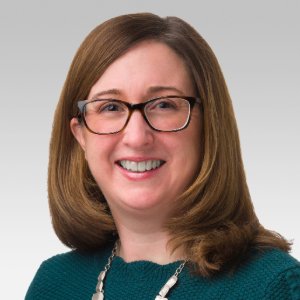
Lynn Welch is a research laboratory manager for the Department of Pulmonary & Critical Care Medicine at Feinberg. She has managed the laboratory of Jacob Sznajder, MD, the Ernest S. Bazley Professor of Asthma and Related Disorders, for more than two decades. In addition to advancing scientific discovery in the lab, Welch is a prominent mentor for young scientists and other lab managers at Northwestern.
Where is your hometown?
I was born and raised in Cincinnati, Ohio alongside my four siblings, growing up on local favorites like Skyline Chili, LaRosa's pizza, Montgomery Inn ribs and Graeter's ice cream. I majored in biology at the University of Evansville where I met my husband Brian—only to discover he had grown up just seven miles from me back in Cincinnati. After graduation, I returned home and began my research career at Cincinnati Children's Hospital, working as a research technician in a developmental biology lab within the Division of Gastroenterology.
What led you to Northwestern?
My husband moved to Chicago in 2000, and I followed after our wedding in 2002. I joined Dr. Phillip Factor's lab at Evanston Hospital, but he soon moved to New York City and connected me with his mentor, Dr. Jacob Sznajder, at Northwestern University. That introduction proved to be the turning point of my career. I joined the Sznajder Lab in June 2003 and have served as lab manager there for the past 23 years.
What are you currently working on?
Alveolar repair after acute lung injury depends on AT2 cell self-renewal and differentiation into AT1 cells, a process our lab has shown is impaired by hypercapnia. Over the past two years, working with Dr. Laura Dada, we have performed single-cell transcriptomic analyses comparing mouse lungs exposed to high CO2 versus room air. We identified an intermediary alveolar epithelial cell population that increases during hypercapnia, alongside elevated alveolar permeability. I am now using a 3D-organoid model to validate these findings, isolating mouse lungs, generating single-cell suspensions and flow-sorting AT2 progenitor cells to create alveolospheres. This reductionist culture system lets us measure proliferative capacity and differentiation while testing pathway inhibitors to identify mechanisms that could improve repair.
How does your work support the research enterprise at Feinberg?
Beyond the bench, I am committed to training researchers at all levels and fostering efficient, collaborative lab environments. Each summer, I mentor high school and college students through the Kimberly Querrey Summer Research Program, providing hands-on scientific training.
As a board member of the Northwestern University Lab Manager Group, I help lead a forum where research staff exchange resources and tackle shared challenges. Our work spans four objectives: facilitating knowledge exchange through monthly meetings and Listserv communication; supporting professional development through workshops on leadership, project management, safety and compliance; promoting interdepartmental collaboration and resource-sharing; and advocating for lab managers' recognition and career advancement.
Why do you enjoy working at Northwestern?
I can honestly say that I love working at Northwestern because of my colleagues in the Division of Pulmonary and Critical Care Medicine. For two decades, I have worked alongside amazing scientists and administrators from around the world, building friendships that span the globe. My PI, Dr. Sznajder, built an internationally diverse research group united by shared scientific purpose. He taught me humility, curiosity and that true leadership means creating space for others to grow.
Since 2012, I have coordinated the NU Lunchtime Book Club, reading over 100 books and connecting with NU community members I might not have met otherwise. We meet via Zoom and welcome everyone, including retired staff and former employees who still join us.
