
June 2026 Newsletter
June 2026 Newsletter
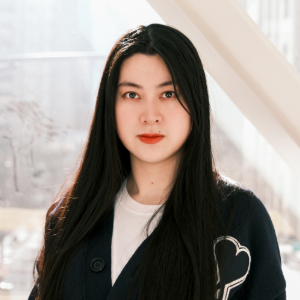
Student Profile
Qixuan Wang is a student in the Driskill Graduate Program in Life Sciences (DGP). In the laboratory of Feng Yue, PhD, the Duane and Susan Burnham Professor of Molecular Medicine, Wang studies tumor heterogeneity and evolution.
She is also a recipient of the DGP Outstanding Student Achievement Award, which recognizes PhD candidates who have demonstrated exceptional research progress, with a focus on clinical and translational significance.
Where is your hometown?
I grew up in Mudanjiang, a city in northeastern China. Winters are quite cold, with many beautiful seasonal attractions such as intricate ice carvings and snow castles, while summers are mild and comfortable, similar to summers in Chicago.
What sparked your interest in science or medicine?
My interest in science began with a general curiosity about biology, but it became more defined when I started working with genomic data. I was struck by how computational analysis could uncover meaningful biological insights, especially in cancer. This experience motivated me to pursue research in cancer genomics, where I now focus on understanding tumor heterogeneity and regulatory mechanisms through multi-omics integration.
What are your research interests?
I am interested in understanding tumor heterogeneity and evolution. My work on glioblastoma integrates 3D spatial sampling with tissue- and single-cell multiomics analyses to map genomic, epigenomic and microenvironmental heterogeneity across the entire tumor. By resolving spatial patterns and distinguishing tumor-wide from region-specific features, we aim to reconstruct evolutionary trajectories and identify potential therapeutic targets that might circumvent heterogeneity-related failures.
What are you currently working on?
I’m currently working on my dissertation, which integrates epigenomic and genomic data to characterize glioblastoma evolution and heterogeneity from a 3D, whole-tumor perspective.
Please tell us about a defining moment in your education at Feinberg thus far.
A defining moment in my education occurred when I received the DGP Award for Outstanding Student Achievement. While the award itself was meaningful, what made it defining was the process behind it, including learning to navigate complex datasets, refining my analytical approaches and gaining confidence in communicating my research. This experience shifted my perspective from simply completing projects to thinking more critically about how my work contributes to broader scientific questions.
What do you hope to do with your degree?
After completing my degree, I aim to work in a research role in academia or industry, focusing on cancer genomics and multi-omics data integration. My long-term goal is to contribute to the development of computational methods and biomarkers that can inform precision medicine. I am particularly interested in applying single-cell and spatial technologies to better understand tumor heterogeneity and translate these insights into clinically-relevant applications.
