
May 2026 Newsletter
May 2026 Newsletter
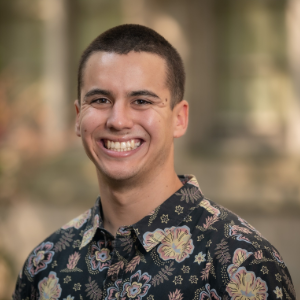
Student Profile
Matthew Barraza is a fifth-year PhD student in the Driskill Graduate Program in Life Sciences (DGP). He completed his bachelor’s degree in molecular and cellular biology at the University of California-Berkeley. Now in the laboratory of Anis Contractor, PhD, the Wendell Krieg Professor of Neuroscience, Barraza studies how vesicles are regulated within neurons.
Where is your hometown?
I grew up in Northern California. I have lived in several cities there including Castro Valley, Berkeley and San Francisco!
What sparked your interest in science or medicine?
Since I was little, I knew I wanted to understand how electrical activity in the brain was generated and went awry in different neurodevelopmental disorders. The interest first stemmed from growing up with an immediate family member who has a rare form of drug-resistant epilepsy, Lennox-Gastaut syndrome. I think attending a large volume of their doctor's appointments and emergency room visits as a little kid pushed me toward wanting a deeper understanding of how the brain functions.
What are your research interests?
I'm interested in how cells communicate with each other in the brain, especially during various stages of neurodevelopment. I think over the last 10 to 15 years there is now a large body of evidence showing other cell types, not just neurons, play an active role in shaping brain structure and function. Before I came to Northwestern, I was interested in how these other cell types (oligodendrocytes, microglia, fibroblasts) were key players during embryonic and early adolescent brain development. I specifically came to the Department of Neuroscience at Feinberg, though, because of the depth of research in neurodevelopmental disorders.
What are you currently working on?
My current research is focused on understanding how vesicles, these tiny structures that are responsible for releasing neurotransmitters, are regulated within neurons. I rely heavily on synaptic electrophysiology, which utilizes recordings from single neurons in ex vivo tissue to dissect how this communication occurs. Combining this functional measure with high-resolution biochemical methodologies has helped me identify new proteins that contribute to millisecond changes in neuronal activity.
Please tell us about a defining moment in your education at Feinberg thus far.
Through continued mentorship at Feinberg, I was awarded a F31-Diversity Fellowship from the National Institute of Mental Health (NIMH). That was a big moment because it was the culmination of months of experiments and writing. Unfortunately, due to shifting priorities, the funding for this basic research was lost. However, I have continued to dive deeper into understanding proteins that regulate synaptic vesicles because of the continued relevance for conditions such as autism, epilepsy and Alzheimer's disease.
What do you hope to do with your degree?
I hope to use my degree to bring new therapeutic options to patients with neurodevelopmental and neurodegenerative diseases. Many of these diseases show changes at the synaptic level where neurons communicate with one another. My degree from Feinberg has prepared me to contribute to new breakthroughs at the lab bench, as well as planning for IND-enabling preclinical studies which are critical to ensuring new drugs are safe for patients to take.
