
May 2026 Newsletter
May 2026 Newsletter
Faculty Profile
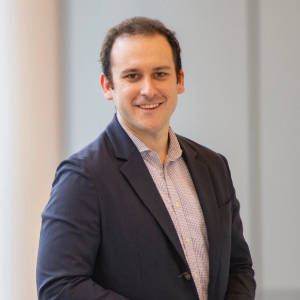
Richard Smith, PhD, is an assistant professor of Pharmacology and of Pediatrics. His laboratory seeks to understand the role of neuronal activity in the development of the prenatal brain by leveraging modern genetics and classic neurobiology approaches with the goal of treating early life ion channel diseases.
What are your research interests?
Broadly speaking, the Smith Lab is focused on understanding the essential genes required to build the human neocortex, which is the brain's center for higher-level thinking, and discovering how we can treat genetic diseases that disrupt this process. Our primary expertise lies in the genes that control the earliest electrical signals in the developing brain. We study how changes to these "bioelectric" patterns during gestation can lead to severe neurological disorders in newborns.
What is the ultimate goal of your research?
We believe that "perinatal neurotherapeutics," the treatment of brain diseases before or immediately after birth, is the next great frontier in modern medicine. Much like prenatal surgery for spina bifida, our goal is to treat these conditions before irreversible brain damage occurs.
On a technical level, we aim to map the complex signaling pathways associated with ion channels and cellular electrical activity. To do this, we use cutting-edge approaches like high-throughput assays, advanced 2D and 3D stem cell tissue modeling and next-generation RNA-based therapies. While our team is deeply driven by uncovering fundamental biological insights, our ultimate motivation is to translate these discoveries into precision medicines that benefit families and communities worldwide.
How did you become interested in this area of research?
I became deeply invested in this specific area because I saw a critical gap in how we treat children with severe, early-onset epilepsy. Today, personalized genetic treatments can take years to develop. This is time these children simply do not have, as every single seizure carries the risk of permanent brain damage. We recognized the urgent need to create faster, broadly effective RNA-based therapies that can stabilize brain activity immediately, buying critical time while highly customized treatments are developed. By combining high-throughput laboratory screening with innovative RNA technologies, we hope to transform early epilepsy care and unlock a better mechanistic understanding of other early-onset brain disorders.
What types of collaborations are you engaged in across campus (and beyond)?
I am incredibly fortunate to be part of a growing, highly collaborative community of leading neurodevelopmental investigators here at Northwestern. This includes partnerships across the Center for Autism and Neurodevelopment, the DevSci Institute, the Center for Genetic Medicine and the Department of Pediatrics.
Beyond our work with human stem cell models, we have an exciting transgenic ferret research program in collaboration with Dr. Byoung-il Bae. This animal model possesses a highly-folded neocortex that closely mirrors human brain development, making them a powerful model for understanding brain evolution and complex architecture. By studying the Abnormal Spindle-like Microcephaly-associated genetic model in a specific animal model, we can pinpoint exactly how early neural stem cell pathways are disrupted to cause microcephaly (abnormally small brain size). Ultimately, this model provides a crucial physiological bridge, allowing us to safely test our emerging RNA-based precision medicines early in development.
We look forward to continuing to build this community within the Department of Pharmacology under the leadership of Alfred L. George, Jr., MD, specifically utilizing automated high-throughput electrophysiology systems to massively expand the scale of our collaborative research.
Where have you recently published papers?
We are strong advocates for open science and frequently share our latest, cutting-edge findings on pre-print servers like bioRxiv so the community can access them immediately. Recently, we published exciting work detailing a first-of-its-kind RNA therapeutic designed for epileptic encephalopathy, as well as fundamental studies uncovering the prenatal origins of this devastating disease.
The lab is largely focused on treating early ion channel diseases and developing novel, high-throughput methods to address them. You can find some of our latest peer-reviewed work in leading journals like Nature Communications and Nature Medicine.
Who inspires you?
My greatest source of daily inspiration comes from our engagement with family foundations and listening to the stories of resilience from parents advocating for their sick children. I am constantly in awe of the strength of these communities and their dedication to building a better future, not just for their own families, but for children who have yet to be born with these same diseases.
In the scientific lab guidance department, in addition to my amazing mentors, Ricardo C. Araneda, PhD, a professor in the department of biology at the University of Maryland at College Park and Christopher A. Walsh, MD, the Bullard Professor of Pediatrics and Neurology at Harvard Medical School and an investigator with the Howard Hughes Medical Institute, I draw guiding principles from pioneers like Sydney Brenner, PhD, who said, "Progress in science depends on new techniques, new discoveries, and new ideas, probably in that order.” We also believe in sharing the excitement of this progress directly with the public, which is why we actively broadcast our laboratory activities and engage with audiences through our Smith Lab Science Twitch channel.
Finally, the critical support we receive from funders, such as the Bachrach Family Foundation, continually inspires and enables our work. With their backing, we are implementing leading approaches to systematically test RNA-based interventions across multiple ion channel targets, which significantly accelerates our ability to find life-changing interventions for pediatric epileptic encephalopathies.
