
April 2026 Newsletter
April 2026 Newsletter
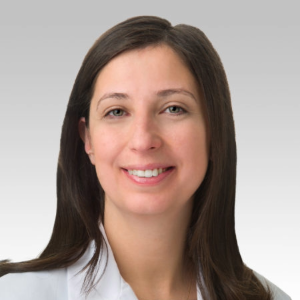
Faculty Profile
Loukia Parisiadou, PhD, is an assistant professor of Pharmacology. Her research aims to elucidate the cellular and molecular events by which mutations in genes linked to Parkinson’s disease contribute to disease pathology by using cell-type-specific approaches.
What are your research interests?
My research focuses on understanding how genetic mutations linked to Parkinson’s disease alter neuronal function and the circuits they form. I am particularly interested in why certain neuronal populations are more vulnerable than others and how these changes contribute to neurodegeneration and behavioral symptoms. A major aspect of my work is developing and applying cell-type-specific approaches that allow us to study otherwise intermingled neuronal subtypes with precision and reveal disease mechanisms that are often missed by broader methods.
What is the ultimate goal of your research?
My work aims to define the mechanisms that drive disease progression and heterogeneity in Parkinson’s disease and to inform the development of more effective, targeted therapies.
How did you become interested in this area of research?
I became interested in this area of research during my postdoctoral training at the National Institutes of Health, where I joined the Laboratory of Neurogenetics at a pivotal time in Parkinson’s disease genetics. There, I came to see disease-associated mutations as powerful tools for elucidating the molecular mechanisms and cellular pathways that drive the disease. That perspective continues to shape my research today.
What types of collaborations are you engaged in across campus and beyond?
Collaboration is a core value of my research. I have been fortunate to work with outstanding colleagues at Northwestern and with collaborators across the US and internationally. These partnerships bring together investigators with complementary expertise in a range of fields, including in vivo neurotransmitter measurements at Northwestern, cell biology at the NIH and medicinal chemistry at the University of Cambridge. These collaborations, including those developed through my role as lead co-PI on an Aligning Science Across Parkinson’s (ASAP) team grant, have been instrumental in advancing my work and have led to important publications and sustained research support.
Where have you recently published papers?
My work has provided novel mechanistic insights into the effects of pathogenic mutations and has been published in journals including Nature Neuroscience, Neuron, The Journal of Neuroscience, Molecular Psychiatry, The Journal of Clinical Investigation, and eLife. I am also strongly committed to open science and transparency. As corresponding author, I post our manuscripts as preprints and make our research outputs, including raw data, publicly available through repositories and open platforms prior to formal publication.
Who inspires you? Or who are your mentors?
I am inspired by individuals who care deeply about science and who lead with generosity and inclusiveness. Over the years, many people have shaped and inspired me in various ways. I would especially like to acknowledge a few people who, beyond their genuine approach to science, believed in me when it mattered most and helped shape and sustain my path: Huaibin Cai, Mark Cookson and Andy Singleton at the NIH, and Raj Awatramani, PhD, and Dan Dombeck, PhD, at Northwestern. Their support has profoundly impacted my career, and their example continues to guide the kind of scientist and mentor I aspire to be. I am also continually inspired by my trainees, whose perseverance through challenges and setbacks exemplifies the resilience that drives science forward.
