
March 2026 Newsletter
March 2026 Newsletter
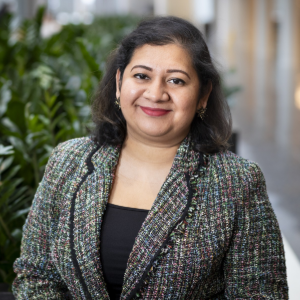
Post-Doc Profile
Shareni Jeyamogan, PhD, is a postdoctoral scholar in the laboratory of James M. Mathew, PhD, research professor of Surgery in the Division of Organ Transplantation. Jeyamogan collaborates with leading transplant scientists across Northwestern to develop innovative strategies for enhancing transplant tolerance through immunomodulatory cells.
Where is your hometown?
I am from Malaysia, a place often described as 'food paradise'. Growing up in such a multicultural environment taught me that the best way to bring people together is over a great meal. That 'open-door' Malaysian concept is something I carry with me always and I think my work buddies can vouch for that.
What led you to Northwestern?
I was drawn to Northwestern because it is a powerhouse in transplant medicine, a field where there is still so much room to grow. My goal has always been to save lives, and while I originally planned on becoming a medical doctor, the financial reality at that time made that path impossible.
Instead of giving up on that dream, I realized I could channel that same ambition through research. I am also a firm believer that big medical breakthroughs can only be accomplished through interdisciplinary and collaborative work. Since Northwestern really supports that, being here lets me be part of the effort to move medicine forward.
What are you currently working on?
I am currently working in the lab of James Mathew, PhD, collaborating with him and other leading experts in transplant medicine, including Jesse T. Davidson, MD, Hong Xu, MD, and Joseph Leventhal, MD, PhD. Together, we are focusing on inducing transplant tolerance through 'tolerogenic' immune modulators like regulatory T-cells (Tregs), dendritic cells and exosomes. My goal is to understand how we can harness these natural agents to ensure transplants are both successful and sustainable.
While the current immunosuppressive drugs are essential, they are incredibly tough on the body long-term. To overcome this, our goal is to use these natural regulatory agents to minimize or ideally replace the need for those drugs, ultimately providing a better quality of life for transplant recipients.
Outside of the lab, I serve on the Trainee Advisory Board for the Center for Human Immunobiology (CHI) and as the external communications coordinator for the Northwestern University Postdoctoral Association (NUPA). My involvement with the broader community helps me view things from different perspectives, which I believe is essential for pushing science forward.
How does your work support the research enterprise at Feinberg?
My work supports the research enterprise at Feinberg by bridging the gap between high-level immunology and clinical applications. By focusing on these 'tolerogenic' modulators, we are moving toward a 'bench-to-bedside' approach, understanding complex cellular mechanisms and turning them into safer, life-changing therapies for transplant recipients.
Beyond the bench, my roles within the CHI and NUPA allow me to strengthen the collaborative culture that Feinberg is known for. Whether helping to shape trainee initiatives or facilitating external communications, I am dedicated to fostering an environment where ideas can move freely across departments. I am a firm believer that the best science happens when we collaborate and approach problems from different perspectives.
Why do you enjoy working at Northwestern?
What I truly enjoy about Northwestern is the culture of mutual growth. It is an environment where you gain the confidence to exchange bold ideas because of the shared mindset that we all move forward together. Whether it’s a quick conversation in the hallway or a formal collaboration across departments, people here are genuinely invested in each other’s success. It makes me incredibly proud to be part of a community where the goal isn't just individual achievement but pushing the boundaries of medicine as a team.
